Showing posts with label Grey Wardens. Show all posts

Saturday, January 22, 2022

The Warden and the King: Analyzing Alistair

"The arl used to come here in the winter when I was small. I, uh... slept with the hounds."

"Yeeees?" asked Alistair, and I was smitten.
Well, you know what they say. You never forget your first love. And they're right.

When it comes to Dragon Age, my very first love was this guy. Yeah, him. The cutie over there to the right, with the slight goatee and the cowlick (I love the cowlick!) and the bewildered expression and the beautiful voice of a guy who got lost in a honeycomb and managed to remember how to chuckle about it later. And he'd do so in a manner that was incredibly charming and self-effacing, especially since he didn't actually seem to know it was charming. 

You remember this guy, everyone does.

The sweet, smart, funny, brave young guy in Dragon Age: Origins. You may know him as Alistair. Or as King Alistair. Or (ouch) as the bitter drunk guy in the bar in Dragon Age 2. Or, almost as tragically, as the Grey Warden who joined up and then may have sacrificed himself in Inquisition.

Rumors vary.

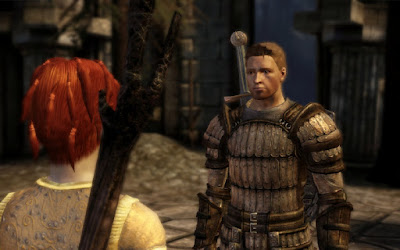
But I still remember when he gave my Warden a rose, out of nowhere. The world was so dark, the skies were as grimy and ugly as the landscape around us, and here was this sweet guy giving my little cynical, tired, nightmare-ridden elven mage Warden a rose.

It's a moment. Or rather, a Moment. It really is. Because he gives her this speech, and it's just lovely, and beautifully acted by Steve Valentine (who I got to TALK TO recently for Dragon Age Day! I know! I'm plotzing! I'll share links soon... he was an incredibly nice and generous interview.)

But yet—because the speech is so beautifully written and delivered, it somehow doesn't matter that we may be experiencing this touching moment covered in Dragon Age Origins gore, or when fighting the Broodmother, or (even more hilariously) in the middle of the confrontation about a possessed Connor (ask my good friend @ImaSithDuh about that one—it's a great story).

The thing is, no matter what, it's just a lovely moment in which Alistair pours out his whole heart, every pure thing within him, to the Warden, and whether or not she loves him back, the most beautiful thing about this scene for me is that the most innocent and lovely element in it is not the rose, but Alistair.

Take a picture of this moment. Save it like a snapshot.

Because, depending on our choices, this Alistair will not survive the Blight, either literally or figuratively.
A Tangled Tree of Potential Futures

Among all of the incredible characters across the world of Dragon Age, Alistair is one of those with the most varied and diverse array of potential futures.

Let's look at just a few: He may stay "soft" Alistair, or become more cynical and "hardened." He may  be someone whose first love is also his last—or he may rapidly progress to having a threesome with Isabela and the Warden. He may accept the Kingship or refuse it, and remain a Grey Warden. He may successfully woo the Warden or be turned down. If he does woo the Warden, he may marry them, dump them, be dumped by them, or take her as his mistress. Or he may end up married to Anora.

He may also quit the Grey Wardens if the Warden chooses to allow Loghain to be conscripted, and in that case, he may end a hopeless drunk, or (softened or hardened) he may accept the Kingship. 

He may refuse the Dark Ritual with Morrigan, or he may accept it, and find that he has fathered a child.

And, of course, regardless of any of his varied romantic paths, he may succeed in killing the Archdemon and survive... or sacrifice himself.

And if he lives, and continues as a Grey Warden, he may also survive only to sacrifice himself in the Fade, in Dragon Age: Inquisition.

Basically, Alistair's future paths are as complicated as he is, himself.

Luckily, it's Dragon Age. It's all going to be written and presented beautifully, and here, by no less than Origins worldbuilder David Gaider, who infuses Alistair with an unflagging joy, wit, and humor that it would take a stronger person than me to resist.

But hey, who wants to resist? Alistair is a sweetheart. He's just a good guy. A good, funny, brave guy.

And maybe doomed. Maybe not.

As always... it's up to us. What happens to this guy, who's so immediately engaging? In a way, it's a beautiful encapsulation of Dragon Age. He can be a hero, a true love, or a cad. He can end up at the heights of kingship or the depths of a Kirkwall alleyway (an outcome that always destroys me).

But he's still always Alistair. He's still the person who wouldn't hesitate to die for what he believes in. He just runs into trouble when what he believes in crumbles. That's his tragedy, and the beauty of his potential character arc. What does he have if he can't die for something anymore? If what he believes in lets him down? 
The Boy With the Hounds

For me, no matter what fate awaits him, Alistair's story is always tinged with just a little bit of sadness.

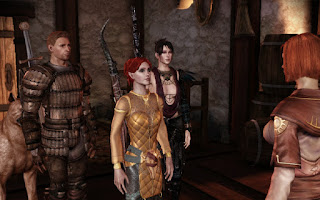
Let's start with his upbringing. Born in 9:10 Dragon, it's implied that even living under the wing of Arl Eamon, Alistair grew up pretty poor and humble, told in childhood that he was a King's bastard whose mother had been a maid who'd died giving birth to him. He spent much of his time among the animals and even slept with the hounds. He was cruelly treated by Eamon's wife Isolde, who wrongly thought Alistair might be her husband's son, and he was eventually sent away to the Chantry (in 9:20 Dragon, to the monastery at Bournshire).

And excuse me for interrupting my wall of text here, but REALLY, Eamon and Isolde? Sending this sweet, funny, affectionate kid to go hang out with the livestock and bed down with the hounds? Isolde because of that stupid thing where the wife blames the kid for her husband's imagined indiscretion? (Gah. I hate this so much. Hated it with Catelyn, for instance, in Game of Thrones. hate it here. And I hate even more that it's believable psychology that actually happens. What is WRONG with people?!) And Eamon, who does all this awful stuff simply to pacify Isolde?

Eamon. Isolde. You are terrible people. Terrible, terrible people. And execrable parents.

But back to our recap of Alistair's journey.
Finding a Place

We soon discover, of course, that Alistair is actually the illegitimate child of King Maric and elven  Grey Warden mage Fiona, and that Arl Eamon had taken in Alistair at Teyrn Loghain Mac Tir's suggestion in order to shelter Alistair in Redcliffe, in part to protect the honor of Eamon's sister, Queen Rowan. Let's just say that Loghain's choice probably says something else about what an awful person he is, and as noted, I'm not a fan of Eamon's parenting skills, either.

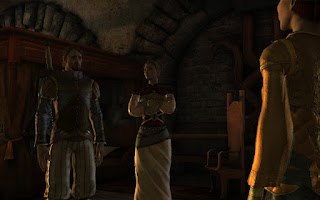
During his years with the Chantry, Alistair was trained to be a Templar, but he chafed under the demands of Chantry life. Now an impressionable young man eager to make his mark on the world, and deeply unhappy with monastery life, he was rescued from this both literally and figuratively when he met Duncan, Commander of the Grey, in 9:29. 

Alistair met Duncan and well, it was love at first sight. Instant hero worship. And who can blame him? Duncan was a commanding and charismatic figure, a living hero doing something brave and selfless for king and country. Adding to Alistair's adoration was the reality that he was just not doing very well at the monastery—he hated life there, he hated being constantly told what to do, and wanted more. He wanted to be out there, doing, fighting, achieving—not hanging out in a church.

Not long before it would be time for him to take his sacramental vows as templar, Alistair began to push himself further, training, competing, and making an impact in a tournament where he fought bravely, but was ultimately defeated by several notable templar champions, including Ser Eryhn, a superb female templar, and other renowned champions Ser Talrew, and Ser Kalvin. 

Even in defeat, Alistair's bravery and pluck made a definitive impression on Duncan, who decided the boy would be a huge asset to the Grey Wardens, and sought to officially recruit him. Alistair was enthusiastic about the chance, and both he and Duncan eventually won out against the Chantry, which didn't want to let him go—the Grand Cleric only conceded when Duncan invoked the Right of Conscription to remove Alistair from the templars and into the world of the Grey Wardens.

But let's pause for a second again.
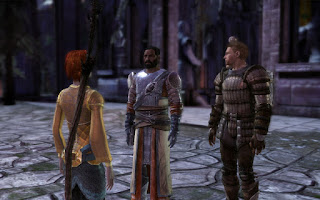
The Worst Gift Ever

If you read this blog, you know that I'm occasionally a bit conflicted on the Grey Wardens and how they work. I admire them unreservedly for the bravery of what they do, of the sacrifice it requires for each of them, and the courage it takes to do so.

However. I'm... not such a fan of "Let's keep the risks of the Joining secret for PR reasons!" Or, hey, "Let's conscript a sweet naive kid with a hero crush into a dangerous secret organization whose induction ceremony involves a significant risk of instant death—and a 10-15 year lifespan even if you survive!"

Ahem.

But. I mean, would YOU do this to someone you loved? Would YOU look into the eyes of a sweet, starry-eyed, brave young man, and decide the very best thing you can do for him is bring him into an organization with a limited lifespan, a fellowship with its share of thieves and rough, condemned men and women, and a certain ending in madness and lonely, violent death beneath the earth?

This is where I just can't help but blame Duncan, at least a little. Despite his shallow and obvious  doomed hotness.

Sorry. It's just so brutal. I do think there's real love for Alistair there, but based on what we see in Origins, Duncan is absolutely ruthless when it comes to stocking the Grey Wardens. He needs bodies. And we quickly realize that he's willing to lie to people and deceive them to get them to the Joining. 

And this is understandable, to a degree. He's a commander under huge stress and impossible odds—a guy facing a worldwide Blight, an Archdemon, and an unexpected tyrant. And he's pragmatic enough to use whatever he can. This is also key to his personality later on, when he will suggest the conscription of Loghain to the Wardens—for Duncan, every person is a potential Grey Warden, a potential tool worth spending.

But still. I'll never quite understand him looking at this young man who is almost a surrogate son... and condemning him to the Grey Wardens.

I know the story demands it. But that doesn't mean I can't resent it for that. Just a little.

Alistair in the Grey Wardens

As far as Alistair's backstory, wow, it's a poignant and predictable scenario for Alistair, in some ways. He was semi-abandoned, starved for love, treated like a stray who was sent to sleep with the hounds. He was also a lonely child who worshipped the Grey Wardens and who dreamed of the chance for future heroism. Only his mentor Duncan made things bearable, providing the father figure he'd always dreamed of.

This mentorship can, of course, end tragically if we decide to conscript Loghain, and it's a life-changing moment for Alistair—a moment that will cause him to give up on his quest with the Grey Wardens entirely. He may end up a drunk or a King, but he will never be the same again.

Neither will we.

Still, that's in the future. For now, Alistair thrived much more under the Grey Wardens than he had with the templars and Chantry, and the lonely young man found himself his first family of fellow misfits.

And then the Blight hit—and we begin the events of Origins, joining Alistair as our first window into the Grey Wardens.

Fairy Tales and Other Outcomes

Alistair is our Warden's first friend among the Wardens, and our immediate first party member. He  gives us our introduction to how the Grey Wardens function, and is basically a soft and understanding companion who guides us into our entrance into fighting a dark and Blighted world, no matter what our chosen origin story.

The key thing about Alistair is that he's just this guy who's funny and kind, our first friend, this Grey Warden who's dedicated to the cause. But his is a journey we're going to watch, up close, firsthand, whether he's our friend or enemy, whether he's a lover or more than that, and whether we dump him or he dumps us.

He's still pretty much always ridiculously charming. But that charm is different if the sweet kid becomes a cynical man, which makes it more painful if we, for instance, happen to play an elven mage romancing him during the Origins story. If we support his path toward kingship, it's that much more devastating when he promptly dumps our Warden as no longer appropriate as a consort. And he's honestly, again depending on choices here, pretty surprisingly cruel about it—especially if doing so as "hardened" (the path for Alistair in which we tell him, after the confrontation with his "sister" Goldanna, that he needs to toughen up and accept the world as it is).

So it's a crapshoot. We may end up with our chosen happy ending as Queen or (for the more accepting and cynical, as mistress), or as companion to the Warden who renounced the kingship—or we may end up dumped... or, worse, mourning the death of our lover, ex, or best friend.

Alistair as Party Member

The fun part of Alistair in our party in Origins is, of course, how he interacts both with our Wardens and (most of all) with our party members. Every relationship is fascinating and instructive, and tells us about each person—both who they are, and who they may become.

With Morrigan he is antagonistic and distrustful, and while I wouldn't exactly want to watch it, I admit that their banters are the stuff of rom-com legend, and I can totally get those who ship them. The love/hate energy is absolutely present.

With Wynne, he's boyish, familial, and a little coy, begging for shirt-mending and sock-washing and support, blushing when she offers too much help. I love their relationship, it's bittersweet when you remember that he never actually had a loving mother figure before her—more on this in my upcoming Meaningful Banters post separately.

While with Sten, he's respectful and appropriately wary. He's openly intrigued with Zevran's world-weary and open sexual confidence (and a little abashed by it), and easy and charming with Leliana (and for me, at least, it's easy to ship both of them here), and amused and curious with both Oghren and Shale. He is, of course, as the boy from the hounds, an outstanding friend to Barkspawn.

It's all so much fun, and so fascinating. 

Immortal Alistairisms

Thanks to David Gaider's innate wit and wordplay, Alistair is always charming and fun to be around, and some of his lines are easily the most immortal across the series, especially, of course, such gems as "Swooping is bad," and "I'll just stand over here until the blushing stops."

"What? Lead? Me? No, no, no. No leading. Bad things happen when I lead. We get lost, people die, and the next thing you know I’m stranded somewhere without any pants."

"Yep. Beasties. Beasties are coming."

"Have you ever licked a lamp-post in winter?"

"That's what I'm here for. To deliver unpleasant news and witty one-liners."

"Andraste's flaming sword! I know where babies come from!"

And my personal favorite: "You know, one good thing about the Blight is how it brings people together."
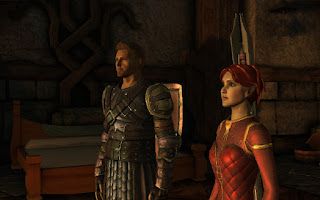
He's also predictably kind when delivering a notice of death: "I hope you like heroes, my lady, because your husband died like one." or "I'm sorry but your husband has fallen in battle. You have my condolences."

Basically, most conversations with Alistair feel like a warm hug with a chuckle at the end. It's incredibly disarming. It was also fun, later on, to see Gaider bringing a similar wit to Dorian, but of course with Dorian we're getting a much more sophisticated and self-aware character. But the same quick wit is still very much a throughline there.

My Journeys with Alistair 

I'm gonna be honest. I've resisted writing about Alistair because, although he was my first Dragon Age love, he also left me with some pretty conflicted feelings.

You know how it is with Dragon Age. These characters feel real. They sneak inside your heart.

And that's what happened with Alistair for me. As with so many of these characters.

My first playthrough ended happily enough, although it felt weird to me. My Warden romanced Alistair, he stayed softened (we gave Goldanna WAY too much money!), refused the Kingship, did the Dark Ritual (yes, everyone's doomed because of this, let's face it, at some point we're gonna have to PAY for this!), and they went off into the sunset together. But the odd thing was, I just didn't see it working out. I adored Alistair, but there was no way in my mind that these two people would ever last romantically. My Warden was too prickly and traumatized (city elf), and Alistair just felt too soft to me to survive her personality long-term. I was so convinced they wouldn't work out that I even wrote a fanfic about my headcanons, because honestly, by the end, I felt like she'd had a deeper connection (doomed, of course) with Sten.

I played other outcomes with Alistair after that, and weirdly that first playthrough was one of the happiest, although it played out oddly in my head. I did get another sweetheart of a playthrough with a Cousland where Alistair married her, and it was a lovely feeling to see our boy installed as King and yet happy in his new role, and with the woman he loved by his side.
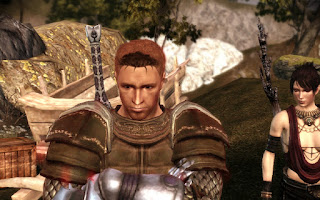
The Darker Side of Alistair

Of course, I also played other, less happy outcomes. And just as a Qun-loyal playthrough will show you an unexpected and colder darker side to The Iron Bull in Inquisition, if you make certain choices with Alistair in Origins, you also get glimpses of his darker side, too. He's pretty brutal if he decides to dump you for the kingship, and if you "hardened" Alistair it's definitely one of those "be careful what you wish for" scenarios, because this is miles away from the sweet boy who once gave you a rose.

Meanwhile, if you take Duncan successor Riordan up on his suggestion to conscript Loghain for the Grey Wardens (for me, it's the perfect punishment for Loghain), Alistair goes absolutely nuclear. Even if you are at 100% approval with him, even if you're romanced, if you choose this, Alistair shuts down completely, goes stone-cold, and severs all friendship with you. He will also walk away from the Wardens (and from fighting the Blight), which stunned me the first time I played it.

The most surprising aspect for me in this potential storyline was that even when we defeat the Archdemon, if he is King, Alistair will talk to us one more time, but nothing has changed. He is still unrelenting and unforgiving, and he basically coldly tells us we should have died, and he's suspicious and going to investigate why we didn't (very plainly implying that he wanted us to do so).

And look, I get it. Every one of us has something we cannot allow, forgive, or overcome. Every one of us has an edge of the map, a "here there be dragons," go-no-further point. For Alistair, who is normally a pretty forgiving person, that edge of the map is the idea that Loghain survives in any way. For Alistair, the only appropriate outcome for Loghain's treason is death—and it's certainly the standard punishment for that crime, especially in the magical medieval world around him.

But it still shocked me. During the whole epilogue at the castle, I remember how I kept trying to talk to Alistair again, to explain that I had done what Riordan had wanted, wanting to tell him why I felt becoming a Grey Warden was actually appropriate for Loghain (he becomes the very thing he betrayed and tried to destroy), and that 10-15 years of fighting Darkspawn, ending in a lonely death beneath the earth was far more suffering than a quick fall of the ax. But of course, I couldn't. Alistair isn't going to listen, you no longer exist for him, his heart is hard, and he has a kingdom to run.
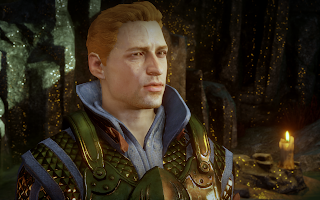

Fairytales and Their Endings

At heart, though, Alistair is a prince—a sweet guy who makes jokes even in the worst or most impossible situations, whistling in the dark. 

At his best, Alistair doesn't really want power, or kingship. Which is, of course, why I think he ends up being such a good king. It's always those who don't want the power who are best at handling it— the person who doesn't want to be king is usually much better and fairer than the person hungering for the throne. Even if he marries Anora, if he does so without taking the Warden as mistress, there is a sense (for me at least) that he's going to try to make the best of it, that he and Anora will try to find solace and companionship in each other. First, because it's expedient, and second, because, well, that's the way Alistair's built.

In the end, I really think he just wants to love and be loved. He's not just the giver of the rose that survives the storm, he's also that rose, himself—a delicate thing, whose survival was a kind of miracle.

But roses die. Princes, Wardens, and kings, die too, willingly sacrificing themselves against Archdemons or Fade monsters. Or they fade away as drunks in alleyways. Or maybe they just grow old, running a country next to a woman they may or may not love, or walking the darkness with fellow Wardens while their time runs out. In every one of these futures, Alistair is still going to be funny and charming; he's still going to say something fantastic and witty at just the right moment, no matter how much darkness or sadness is in his heart. Because that's also how he's built. He'll always try to add a bit of hope or sweetness where he can, to lighten the darkness.

Perhaps the most poignant lesson of Dragon Age: Origins is that the brightest lights are still capable of going dim. Roses bloom, even in darkness, but they also die. 

Sometimes, maybe it's enough that they ever bloomed at all.

Wednesday, May 13, 2020

TEVINTER NIGHTS Analysis: The Horror of Hormak


Ghilan'nain? Girl, you've got some
explaining to do!
"The expressions on the faces of those elven rulers betrayed a contempt that was almost palpable, the beatific smiles edged with disgust and disdain for the creatures at their feet. And the subjects, far from kneeling in reverence as Ramesh had first thought, seemed more to be cowering in terror."
—From "The Horror of Hormak," DRAGON AGE: TEVINTER NIGHTS

WARNING: SPOILERS on TEVINTER NIGHTS! Please read at your peril!

So hello again, you beautiful Wardens, Hawkes and Inkies!

I hope you're well and safe out there—hopefully, wearing masks while pretending to be Orlesian, because why not? This is our time, people, let's be Orlesian!

As I noted in my previous post here, I wanted to offer some analyses on stories in TEVINTER NIGHTS that I felt specifically really advance the lore, which teach us valuable facts about the year (to year and a half or so) since the end of the events in "Trespasser." I loved the entire compilation, but my focus here is on stories that give us hints for plot points, characters, or directions we might find ourselves facing, also, in our long-awaited Dragon Age 4.

Which is why I'm back today with my notes and thoughts on John Epler's wonderful horror tale "The Horror of Hormak."

Please Note: I follow several amazing analysts, artists, and critics in the Dragon Age community, led by, first and foremost, Ghil'Dirthalen, who's brilliant, not to mention kind, funny and insightful. But to keep my ideas my own, I have not listened to anyone about TEVINTER NIGHTS. I do plan to do so after I've blogged about all of the stories that contribute to lore (and can't wait). 


As I search for new clues from TEVINTER NIGHTS,
we get a ton of lore in John Epler's story "The
 Horror of Hormak"
So—in a nutshell, insights are my own, and mistakes are also my own here. If I'm excited about a revelation you've already been yawning over, hey, I'm late to the party. But ultimately, I'm just very careful about appropriation and want to present ideas (however goofy some of them are) that are really my own. And honestly it's just so much more fun for me that way, so thanks for bearing with me.

So here we go!

The Story at a Glance

The story begins deep in the Nevarran Forest—that's all we get on location, but my guess is that it is specifically in or near the Northern part of the Planasene Forest, which is just north of the Waking Sea, and slightly West of Kirkwall.

Grey Wardens Ramesh and Lesha are investigating the whereabouts of a lost Grey Warden mining expedition led by Senior Warden Jovis, now lost for eight days and counting—and the clock is ticking on whether they can possibly still be alive. To complicate things, Jovis was a man Ramesh had once deeply loved and turned away from, losing a chance of real happiness, despite the hardships of Grey Warden life. He is now nearly desperate to save Jovis, and to undo his past decisions. Ramesh and Lesha seem to be heading East, which will bring them out of the forest eventually, and into the northwestern arc of the Vimmark Mountains. 

Lesha is a young Tevinter mage—cocky and fearless, an Acolyte who has only been a Warden for a few years, while Ramesh, the commander, is a Senior Warden who is older and more careworn. He's been a Warden for 23 years and counting, and can almost taste that the Calling is upon him. But it's Lesha who is uneasy right away, who notes that "Something's wrong about these woods. Feels like the air hates me. Wants me to die." She's not wrong.


The story follows the two into the darkness of forest and nightmare, as they find a surviving Warden from Jovis's party, Warden-Recruit Friedl, a young woman, but she's been badly wounded and whatever she experienced has driven her mad enough to mutilate and blind herself. Ramesh and Lesha attempt to calm and save Friedl, even as they continue to pursue the mystery deeper into the forest, but eventually, Friedl kills herself. When Ramesh checks her dead body, it vomits gallons and gallons of a terrible, briny seawater-like substance. 

Again with that "seawater" theme. Also, ew, ew, ew, ew, ew! (I HAVE VOMIT ISSUES, PEOPLE!)
PARAPHRASED SEGUE: (to the TV show "Monk") 
DOCTOR: So, Mr. Monk, you have been poisoned and I'm sorry to say are going to vomit copiously and then die in agony. 
MONK: (weeps quietly) 
MONK'S ASSISTANT NATALIE: He's upset about the vomiting. 
That's... basically me. I have rarely so identified with a fictional character.

ANYWAY. In the aftermath, Ramesh is kind and supportive of the younger mage when she has difficulty processing the horror of the moment, but also adept at keeping her focused on their ultimate goals and loyalties. It's moving and believable.

On a side note, can I just say that I love stories like these, in which two adults are in close prolonged circumstances and that there is no stereotypical sexual tension? Yes, I love UST. But there's so much more to friendship, work, and other relationships, and it's lovely that Ramesh (who is, at this point, revealed as either gay, bi or pan) and Lesha have nothing but a warm, kind, mutually respectful, and entirely professional relationship from beginning to end. It's a signature of BioWare's inclusivity and general respect for individuals and relationships, and I love that. And let's hear it for yet another LGBTQ protagonist in the compilation!

The Deep Roads are always scary places for me. (I would have made a
terrible Warden. I would have just run around screaming.)
Onward! The two exit the forest into rocky terrain marked by three distinctive peaks (I'm again assuming these peaks are most likely in the Vimmarks BUT what makes them distinctive? Have we seen them before? It's killing me...) as they discover the entrance to the Deep Roads beneath them, littered with twisted Darkspawn bodies and blood (no Warden bodies), giving them hope of finding their companions alive. They bravely enter a finely carved doorway in the ancient dwarven style, runes above the entrance naming it as "Hormok" (So is this deliberate or is the title a typo? No judgment if so...). They descend, the passages glowing with lyrium, and discover great and beautiful chambers like the most ancient dwarven thaigs, and then, descending further, fight a fierce, brief battle with more twisted darkspawn before discovering a new descent into areas that are first dwarven, then obviously ancient and elven.

When the duo reaches the final chamber, it's revealed to be a massive, ancient chamber of horrors, a kind of "creation tank" of viscous, briny fluid powered by a huge lyrium crystal hanging above. They confront the biggest creature, a terrifying giant centipede merged with the torso of Warden Jovis, who, faced with his love, manages to retain his sanity for a few moments to relate what happened to his doomed company, and what "she" (Ghilan'nain, I believe) plans for this chamber. 

Jovis asks Ramesh to destroy the chamber, then loses control permanently and the creature attacks. Lesha manages to save Ramesh, then gives him enough time to escape, sacrificing herself by destroying the lyrium crystal and exploding the chamber. Ramesh finishes the job by escaping far enough to use the lyrium charges (poignantly using the love note from Jovis as a fuse), and the entire mountain seems to come down behind him, burying the horrors of Hormok forever.


"The Horror of Hormak" adds to the implications we got in DAI that
beneath the Deep Roads, are even deeper ones—and the elves were there first.
Ramesh resolves to carry his story—and warning—to the rest of the Wardens, even as he realizes with horror that the carvings below had depicted twelve different locations for aravels and prey (eleven plus the one just destroyed at Hormok). Meaning, the battle has just begun...

What It Adds to the Lore (and Implies for Dragon Age 4)

  • One of the things I really liked about this story was the atmosphere, the way it bridged the classic fantasy-horror of Dragon Age Origins with the lore and character progression (and larger world) of Dragon Age Inquisition. I also liked that all along, we're expecting war-tired, near-his-Calling Ramesh to die, but it's fresh-faced Lesha who doesn't survive. (Darn it.)
  • We're told outright that the Wardens' numbers are dwindling ever since Ostagar, and then Adamant. To an alarming degree—that they don't even have the numbers to mount an actual rescue mission for situations like this (and which used to be routine). After this reference, and the rumblings of disquiet from Weisshaupt in "Trespasser," I definitely feel a "crisis of the Grey Wardens" is looming for us in Dragon Age 4.
  • The presence of another prominent Tevinter character, Lesha (and that she's a Vint Warden!) tells me that yet again, Tevinter settings and characters are going to be really important in Dragon Age 4. John Epler also noted on Twitter that Ramesh is a person of color who in our world would be of Indian descent, so again, this suggests to me that he may be of Tevinter origin also.
  • Lesha's intuition about the forest reminds me strongly of Myrion's reactions when they entered Arlathan Forest, but here it's less about a sense of hidden power and is more openly toxic and antagonistic. This, too, is the work of ancient elves. Just... angrier, more arrogant elves. (It's interesting to note that Nevarra's biggest forest, the Planasene Forest, carries the ancient name for Nevarrans. Once upon a time, if we go back far enough, this wasn't Nevarra—but was evidently a key location for the ancient elves themselves.)
  • As soon as the two Wardens encounter hidden violence in the forest, there is a scent of "the sea on a stagnant day." As they are far from the sea and evidently nowhere near the coast (so are evidently pretty far north in the forest, if it is the Planasene), Ramesh is understandably freaked out.
  • Ramesh notes that the Deep Roads are closer to the surface here than they are in most of the rest of Thedas. This is a fascinating detail for me. Did we know this before about Nevarra?
  • Friedl, the rescued Warden, just says, over and over again: "We didn't know. And now we do. Oh, yes—we know better. They taught us, gave us a lesson." Hellooooo, Evanuris.
  • After revealing that she has clawed out her own eyes (!), Friedl turns to Ramesh and says that they need to leave this place "to her, to them!" Oh, man. This is good stuff. To her: And of course, it seems obvious in retrospect that the "she, or her," is ancient elven Evanuris and semi-goddess Ghilan'nain.
Why It's Ghilan'nain (It's SO TOTALLY Ghilan'nain)
Evidently not even the halla were safe from Ghilan'nain's experimentation...
 it's really upsetting! (Hush, little halla, you didn't hear this...)

So let me count the ways:

  • As we know, according to a Codex entry from the Temple of Mythal, Ghilan'nain was always a monster-maker, and she did actually make monsters, giants, and twisted creatures of air, earth and sea in the ancient days, that she later destroyed at Andruil's urging.
  • However she did not obliterate all of the monsters, most notably, those of the deepest parts of the sea, and—wait for it—you guys, it's too perfect—"Pride stayed her hand." Pride!


    I'm not sure this actually means SOLAS literally stopped Ghilan'nain from killing her sea monsters, but it's a fun idea -- maybe he just has a soft spot for giant squid? 

    MASKED WAITER: Table for Pride?
    SOLAS: Oh, yeah, sure. Pride. That's me.
    WAITER: Right this way!
    SOLAS: Thank you.
    WAITER: Would you like tea to start your meal?
    SOLAS: NO. I despise tea.
    WAITER: Dude, I make minimum wage and there's a pandemic on.
    SOLAS: Please forgive my rudeness. Water would be fine. Also, I will be ordering the calamari appetizer.
    WAITER: Very good, sir.
  • In some Dalish stories, Ghilan'nain is wounded and blinded by a hunter she cursed, and turned by Andruil into the first halla. Interestingly enough, only then is she raised from mortal to 'immortal' or godlike status. As always with the Dalish, we need to view this story as a twist or warped reflection of what actually happened.
  • Further, Ramesh dreams of Jovis, and in the dream, Jovis is blinded just as Friedl had been.
  • Don't forget that Ghilan'nain is also directly implicated (if we drank from the Well of Sorrows) in spurring a sacrilegious attempt by a 'sinner' who followed Dirthamen to take on the "forbidden" (draconic?) form of the gods. The act prompted swift anger and judgment from Mythal at levels unusual to her, so I always see this as one of the earliest attempts at active rebellion against Mythal, in which Ghilan'nain perhaps was testing the waters.
  • Ghil was the beloved of Andruil, whom Mythal pretty famously punished in a post-abyssal beatdown and then mindwiped. For that and other reasons, I could totally see Ghil being one of the first Evanuri to join Andruil as a major antagonist to Mythal after that (given Andruil's legendary hatred of Fen'Harel, I think she has to be his primary antagonist).
  • There is a symbol—the horns of a halla—repeating everywhere on the columns in the ancient elven chamber discovered by Lesha and Ramesh. The symbol seems to shift in a creepy and magical way out of the corner of the eye.
So yep. It's Ghil. Onward!


Just a reminder that the Qunari aren't the only ones
capable of creating explosives...
More Revelations
  • Ramesh's emotions are so bittersweet and sad, and his regrets are palpable. Over and over again, he revisits his chances with Jovis, even still carrying around the last note of love and hope Jovis had once sent him. I find the emphasis on regret interesting, as it carries us forward nicely (and thematically) into the next story, Lukas Kristjanson's "Callback" (but more on that in a future entry).
  • Lesha and Ramesh use ancient dwarven lyrium charges (like lyrium grenades) to access the deeper parts of Hormok's secrets. I completely forgot that we learned about these in Inquisition.
  • As they begin the descent from dwarven ruins to ancient elven ones, Lesha notices ancient carvings of three figures—"a supplicant, a priestess, and a monster." Ramesh notes that the beings are elven, but Lesha notes that the carvings themselves are dwarven. The series of carvings changes subtly as they go along, so that the priestess looks more and more cruel in each one, and the monster more and more changed.
  • For me, this story doubles down on the shared history of elves and dwarves that we glimpsed in DAI, as it notes casually that Wardens have always found a mixture of elven architecture way down in the Deep Roads, and further ties together and further bolsters my own theory that the dwarves were created as sort of mindless slave-worker bees for the elves themselves, meant to live lifetimes of toil underground, and perhaps only later freed by the death of a titan (my theory—the one that Mythal killed, which I posit was a self-sacrifice and mercy-killing). I further think this is what broke their 'hive mind' while also breaking their link to the Fade (alternative option: Mythal did it for them). But I haven't really organized those theories yet, so just ignore me.
  • In the next-to-last chamber, a gigantic and beautiful, awe-inspiring place, Ramesh notes the exquisite wall carvings, bas-reliefs in three parallel bands around the entire chamber. As in the Temple of Mythal, these are actually mosaics of tiny gemstones.

Let's look at the carvings with Ramesh, shall we?

  1. The topmost band depicts noble ancient elven royalty and respectful supplicants.
  2. The middle band depicts elven mages apparently healing and comforting the sick and dying.
  3. The bottom-most band shows incredibly elaborate ancient aravels being pulled by armies toward the mountains (including the very mountains above them now).
  4. Upon closer examination, the bands begin to appear vaguely wrong and corrupt, even frightening. The halla have "too many horns" and look "insectile." The aravels are not grand landships after all, but are revealed to be prison vessels with barred windows. And the mages aren't healing people, but corrupting them. And the elven rulers are increasingly shown to be contemptuous, arrogant, and disgusted with their cowering and terrified subjects.

    Is the yellow-greenish lyrium an important clue here?
    So let's look at these revelations: The Evanuris were imprisoning their own people and apparently dragging them to these different locations in order to corrupt and mutate them, building some kind of secret army. We already know from Inquisition that several of the 'gods' (Falon'Din, cough) also loved sacrificing large numbers of their subjects just for the fun of it. And of course, here, we also see that the Evanuris were also actively corrupting (not healing) their own people in further experimentation, leading massive armies to bring their prison ships to their doomed final destinations.

    Nah, that's not disturbing at all. (Seriously, Evanuris people, what was WRONG with you?)

    Wait, Where Have We Heard This Before...?

    Last but not least on this thoughtline is that it offers perhaps the subtlest of hints on another race in Thedas: The Kossith/Qunari. Who also can have varying numbers of horns, and whose origins Bull mused about in Dragon Age: Inquisition, wondering if the Qunari shared some dragon blood somehow:

    BULL: "Well, you know how we have horns? We kind of look more... dragony than most people. Maybe it's that.....But a few of the Ben-Hassrath have this crazy old theory. See, the tamassrans control who we mate with. They breed us for jobs like you'd breed dogs or horses. What if they mixed in some dragon a long time ago? Maybe drinking the blood, maybe magic. I don't know. But something in that dragon we killed... spoke to me."

    To me, this is a pretty big potential additional hint that the Qunari may in fact be the descendants of one of Ghilan'nain's first experimentations at combining or corrupting races or species.
More Lore Notes:
  • The corrupted, insectile halla are disturbing to consider. If there is any animal supposedly sacred to Ghilan'nain, and to the elves past and present, it is the halla, and yet here we see that she even warped the halla into monstrosities. This hit me as a truly profane and grotesque act. Just imagine how the Dalish would react!
  • The final chamber's lyrium glows with a "sickly" light that is, interestingly enough, not blue (or red), but yellow and green.
  • There's a lot of body horror in the final chamber—monsters warped and assembled grotesquely out of 'parts' to create a corrupted and terrifying army. But we do learn that the Darkspawn monsters are changed/warped simply by contact with the viscous pool, whereas Jovis tells Ramesh that the Wardens (and presumably all thinking or higher beings) had to actually drink from it to be transformed.
  • Jovis seems to imply that Ghilan'nain is doing all this with a purpose, but that she must be fought, and her chamber of horrors buried and destroyed: "She cannot have it. Not again. Locked for a reason."

    Locked—by a certain Dread Wolf, one assumes.
  • It's interesting to note that if you examine a map of Thedas (here's one of my favorites, a fantastically detailed, zoomable version thanks to The Wyrd Sisters of Thedas), there is a Grey Warden Prison located in the central Vimmarks, just Northeast of the Planasene Forest. Which further makes me think that's the general area of this story's setting, as it involves multiple Grey Warden parties scouting the area. This also gives Ramesh a believable and easily accessible place to which he can return with his sad (and scary) news.
  • Ramesh's horrified realization that this was just one of twelve different chambers of ancient horrors, and that there are eleven remaining under eleven other distinct mountain peaks, definitely gives me further food for thought.

Which mountains? My totally wild guesses, just using proximity of peaks/mountains to ancient elves, dwarves, or general Thin Veil Spots, might include: 
Time to take a closer look at the mountains of Thedas...


  1. A peak in the Hunterhorn Mountains in far Western Thedas (perhaps near Kal-Sharok and the Blasted Hills)
  2. The White Spire peak, North of Brynnlaw, and East of Arlathan Forest. (For me this one's almost a certainty. It's a lonely mountain near the most ancient elven location in all Thedas!)
  3. A mountain in the Gamordan Peaks in far Southwestern Orlais—perhaps even near Mont de Glace ("Ice Mountain"), another solo peak?
  4. In the Southern Frostback Mountains, perhaps farther East, towards Valammar? (I don't think there's one near Skyhold, because Solas would not have chosen an 'unclean' area for his castle.)
  5. Near Bownammar (Dead Trenches), Southeast of Lothering, Northwest corner of the Southron Hills. There are Elven ruins not far away to the Northeast, as well.
  6. A peak in The Hundred Pillars between Tevinter and Antiva. There's access to a ton of ancient elven locations to the West, and it's perfectly situated to cause trouble.
  7. Soldier's Peak (The Coastlands, Southeast of Highever, and directly West of Amaranthine)
  8. Talo's Eye, a lone peak in the Northeastern Anderfels
  9. Arl Dumat, a lone peak below the Urthemiel Plateau (Northwest of the Forbidden Oasis)
  10. Perhaps another near The Colossus and Kal Repartha in the Northwest Hissing Wastes
  11. With so many ancient ruins, there's got to be something near the Arbor Wilds, perhaps in the Uncharted Territories.

Final Musings

This last revelation of eleven more locations is quite the bombshell. If these things are scattered across Thedas in eleven other places, it's pretty freaking terrifying! It's basically eleven massive, ancient Elvhen bombs waiting to detonate. It would make the "Dragon's Breath" plot by the Qunari look like child's play in comparison. (NEW: The very smart and helpful Q. McLamore on Twitter also reminded me of the crucial lore that since Origins, we have heard rumor of "Twelve great Thaigs" in history past. Which is so exciting and maddening!)

All of this brings up further questions for me, as well. First and foremost, why were the Evanuris seeding terror, corruption and death across all of Thedas thousands of years ago, creating monstrous armies-in-waiting?

Was this in reaction to Mythal and Solas's division from their ranks? Or a reaction to something bigger, or something they simply anticipated? Remember, at this point, elves ruled everything. So why do this? What were they so afraid of? And why would beings that valued power, beauty, life and learning (according to the Shattered Library) so allow themselves to be twisted by arrogance that they would become creators of monstrous death? Or were they so bored with immortality at this point that it was just one more way to create drama and kick an anthill on the most massive scale? 


All of this is possible. Especially since I've always believed that Andruil created (or sparked the awakening of) the Blight and Darkspawn after becoming blighted and insane in the Abyss. So it certainly sounds like she and monster-making Ghilan'nain were a match made in heaven, if so.


If nothing else, "Horror of Hormak" pretty definitively backs up Solas's
account that the Evanuris were evil and needed to be stopped.
These revelations about the corruption and cruelty of the Evanuris also serve another purpose—they independently confirm Solas's revelations in "Trespasser" that he was fighting against beings who had become evil and corrupt with power. Which I already believed, based on what we were presented, and based on the revelations of the Codices, the Well of Sorrows, Solas's ancient tower mosaics, and the dialogues with Flemeth. However, whether or not Solas was telling the truth has still been a topic for frequent debate since "Trespasser"—understandably so—and yet here we have the Evanuris seemingly confirming those facts with their own hands, deeds, and mosaics.

This is especially important, to me, because it's continuing to keep Solas balanced between hero and villain, emphasizing Solas's complexity as a character (and confirming that his origins were pretty undeniably heroic). The people who created this chamber, who carved those carvings, who murdered Mythal, who enslaved their own people, who treated the dwarves like mindless things, who siphoned off the blood of Titans—these people deserved to be stopped.

The 'horror' of Hormok is that the ancient evanuris appear to be even worse than Solas described them. They were not gods, but monsters.

But what do you think?

Thanks as always for checking this out. I'll be taking a look at "Callback" next in the series (get out your handkerchiefs, people!). Meanwhile, stay safe out there.

Monday, September 24, 2018

The Dragon Age Timeline: From the Black Age Through the Steel Age (Griffons and Nugs and Blights, Oh My!)


Welcome to the next installment on my own personal take on the Dragon Age Timeline, taking us from the Black Age through the Exalted and Steel Ages, and then on to the Storm Age. Please don't miss my earlier installments on the Ancient Age, and from the Divine Age through the Towers Age.

We hit some exciting stuff here, especially when we get to the Exalted Age and the events of the Fourth Blight and of Last Flight!


As always, let me know what's missing or wrong here, so I can add or edit as needed—meanwhile, faster than a griffon's wing, here are those next ages for your review and enjoyment!

The Black Age:
  • 4:00 Black - Werewolves reappear in Ferelden.
  • 4:20 Black - Herbalists rediscover elfroot and its healing properties.
  • 4:22 Black - King Guiomar the Younger of Antiva dies at the hands of Callisti di Bastion, of the Antivan Crows.
  • 4:30 Black - Queen Asha Subira Bahadur is born in Rivain.
  • 4:40-5:10 Black - Exalted Marches are declared by the Chantry, continuing through 5:10 Exalted.
  • 4:45 Black - The elf Alidda of Halamshiral is arrested for slaying twelve chevaliers. She escapes and kills twenty more, before cutting her own throat to avoid capture.
  • 4:46 Black - Divine Clemence I commissions Tevinter fugitive (and former magister) Adralla of Vyrantium to write the Litany of Adralla in order to protect against blood mages and demonic possession.
  • 4:50 Black - ~(Estimated) marriage of King Dario Campana to Asha Subira Bahadur, Gana of Ayesleigh.
  • 4:52 Black - The Great Riot of Val Royeaux takes place.
  • 4:80–84 Black - The Orlesian Empire crosses the Frostbacks and attempts invasion of Ferelden for the first time.
  • 4:83 Black - The Teyrns of Ferelden unite to push back Orlais. Orlais attempts to take Highever, but its siege is repelled successfully by the port.
  • 4:85 Black - The minstrel Uccam records the saga of Dane and the Werewolf.
  • 4:85-4:90 Black - (Estimated) Birth of Isseya. Birth of Garahel.
    ▪ Chateau Haine is built in the Western Vimmark Mountains by Lord Norbert de la Haine
    .
  • 4:97 Black - Divine Rosamund is born.
  • 4:99 Black - Divine Justinia II names the Exalted age.

Exalted Age:
  • 5:10 Exalted - Orlais marches in the last Exalted March on the Tevinter Imperium but then ultimately retreats.
    ▪ Calenhad the Great is born to a Highever merchant.
    ▪ The Grey Wardens sign treaties with Alamarri teyrns and build a fortress in Denerim, along with several other outposts.
    ▪ Isseya leaves the mage Circle to join her brother with the Grey Wardens.
  • 5:11 Exalted - ~(Estimated) Isseya and Garahel survive the Joining and join the Grey Wardens.
  • 5:12 Exalted - Andoral awakens, and the Fourth Blight begins.
    ▪ Garahel meets and bonds with his griffon Crookytail. ▪ Darkspawn overrun Antiva, and the soldiers evacuate Antiva City. The royal family refuses to depart, and the Antivan Royal Guard rebels and kills King Elaudio before the Grey Wardens stop them.
    ▪ The Wardens evacuate the surviving royals and court members using griffons, but on the retreat, the Archdemon attacks, and pretty much all of the royals are killed, as well as most of the Wardens.
    ▪ Isseya, her griffon Revas, Garahel, his griffon Crookytail, and a small number of Grey Wardens survive, including the mage Calien. Amadis Vael, Princess-Captain of the Ruby Drakes Mercenary company, survives the trip.
    ▪ Using enchanted Aravels drawn by griffons (thanks to a brainstorm by Isseya), the Grey Wardens are able to evacuate many civilians from Wycome to Starkhaven.
    ▪ Darkspawn pour into the Free Marches and Rivain.
    ▪ The Blight rises in the Anderfels, and Hossberg comes under siege.
    ▪ Orlais and Tevinter successfully drive back the darkspawn attacking their cities.
    ▪ Tevinter refuses to send any aid to the Free Marches or the Anderfels, while Orlais sends only a token force.
  • 5:16 Exalted - Divine Hortensia II dies. Divine Rosamund is elected. 
  • 5:20 Exalted - Garahel leads an army of Wardens and Anders to successfully break the siege of Hossberg.
    ▪ Kirkwall declares the common nug to be vermin and a possible carrier of the Blight, causing mass exterminations of the creatures that came to be known as the Battle of Squealing Plains.
    ▪ Attempting to save the darkspawn-infected griffon Shrike, Isseya discovers a way to put griffons through the Joining.
  • 5:21 Exalted - Darkspawn destroy most of the Free Marches.
    Chateau Haine becomes Fortress Haine, a Grey Warden garrison commanded by Isseya.
    ▪ The refuge known as The Retreat is carved into the mountain at Fortress Haine, eventually housing hundreds of refugees.
    ▪ Garahel orders Isseya to put the griffons at Fortress Haine through the Joining, and Isseya does so under protest, save only for a few remaining griffons including Revas.
    ▪ Thanks to the griffons and Grey Wardens, Kirkwall is successfully evacuated.
  • 5:22 Exalted - Garahel assembles Wardens from Orlais and the Anderfels and marches to Starkhaven, where he organizes an alliance between the leaders of the Free Marches. They march north as a united army under the Grey Warden banner.
  • 5:24 Exalted - Isseya's corruption from the Taint progresses visibly. She puts most of the remaining griffons through the modified Joining.
    ▪ Battle of the city of Ayesleigh. Garahel kills the archdemon Andoral and perishes, along with Crookytail.
    ▪ Lambert Valmont, a young Orlesian captain, is declared a hero by King Azar Adalberto Campana of Antiva. Lambert weds one of Azar's daughters and the Valmont family is elevated to the nobility.
    ▪ Upon returning home, the Orlesian emperor is forced to match Azar's honors by granting Lambert a Marquisate.
    ▪ Darkspawn continue to plague the Deep Roads and to attack Orzammar.
  • 5:25 Exalted - Isseya is called back to Weisshaupt Fortress at news of an illness among the griffons, and she realizes that her modified Joining has infected and doomed all of the griffons, even those not put through the ritual.
    ▪ Isseya goes to Amadis Vael, who gives her the world's only remaining clutch of griffon eggs.
    ▪ Isseya uses blood magic to take the darkspawn taint from the eggs and into herself, then conceals the eggs in a state of magical suspended animation in a cave in the Anderfels. She then leaves clues in records at Weisshaupt and hides her journal for a future mage to uncover.
    ▪ Isseya flies Revas one last time, then both perish in her Calling.
  • 5:33 Exalted - Calenhad Theirin defeats Teyrn Simeon in the Battle of the White Valley and is named Teyrn of Denerim.
  • 5:37 Exalted - Tylus Van Markham, the first king of the Nevarran Van Markham family, kills the ruling Pentaghast and is crowned King, winning several major battles against Orlais.
  • 5:38 Exalted - King Tylus Van Markham turns the western Free Marches against the growing power of Orlais. He wins several major border wars against the Orlesians, expanding Nevarra into a nation.
  • 5:42 Exalted - With the crowning of King Calenhad in Denerim, the warring factions of Alamarri are at last united under a single banner to form the country of Ferelden.
  • 5:71 Exalted - Divine Rosamund dies after fifty-five years in power. Divine Amara III is elected.
  • 5:99 Exalted - Queen Madrigal of Antiva is assassinated. Divine Theodosia I receives news of Queen Madrigal's assassination by four blades and declares the Steel Age.

The Steel Age: 
  • 6:15 Steel - Dragons are hunted to near-extinction, most famously by the Pentaghast family of Nevarra.
  • 6:18 Steel - Fionne Theirin becomes the new Queen of Ferelden.
  • 6:30 Steel - The Qunari land in Par Vollen, conquering it from Tevinter.
  • 6:32 Steel - Beginning of the Qunari Wars in Seheron and along the coast of Rivain.
  • 6:35 Steel - The Qunari conquer the Antivan city of Treviso.
  • 6:42 Steel - The Qunari continue to conquer much of Tevinter, Rivain, and Antiva and begin to assault the Free Marches. They attack but do not take Minrathous. 
  • 6:50 Steel - Under warlord Balak, the Avvar sweep into the heart of the Ferelden Valley in massive numbers. The Bannorn is put to the torch.
  • 6:52 Steel - The Avvar are pushed out of Ferelden, leading to a terrible famine in Ferelden, and to hostile relations between the Avvar and Ferelden for ages.
  • 6:85 Steel - Tevinter begins to successfully beat back the Qunari.
  • 6:90 Steel - The Qunari besiege the city of Seleny. The appearance of a dragon, rumored to be called by Yavana, the Witch of the Wilds, forces them to retreat.
  • 6:99 Steel - Divine Hortensia III names the next age the Storm Age, foreseeing a growing storm of violence across Thedas.

The Storm Age:
  • 7:05 Storm - Sophia Dryden loses the Fereldan throne to her cousin Arland Theirin, joins the Grey Wardens and rises to the rank of Warden-Commander in Ferelden.
    ▪ Arland is a brutal leader, and Banns approach Sophia to intercede, and she attempts a coup against her cousin using the Grey Wardens.
    ▪ At the Battle of Soldier's Peak, Arland defeats Sophia, who is killed.
    ▪ The Grey Wardens are expelled from Ferelden and Soldier's Peak is abandoned.
  • 7:23 Storm - The Qunari are pushed back to Seheron and Rivain.
    ▪ The Battle of the Nocen Sea takes place as the largest naval engagement in history and despite ending in stalemate results in the destruction of many ships on both sides.
  • 7:25–85 Storm - The Exalted Marches on the Qunari are declared by both the Imperial Chantry (to retake Seheron and Qarinus) and by the Andrastian Chantry (in a pledge to retake Rivain).
    ▪ During the Exalted Marches, Orlais manages to steal the Tome of Koslun from the Qunari.
  • 7:28 Storm - A dragon cult following High Dragon Urzara devastates the northern Free Marches until the dragon is slain by a militia group.
  • 7:34 Storm - Archon Nomaran is elected directly from the ranks of enchanters in Tevinter, overturning the old rules forbidding mages from taking part in Tevinter politics.
    ▪ Hessarian's tale of his own conversion is translated.
  • 7:44 Storm - Freyan, the newly crowned emperor of the Orlesian Empire, allows women to become knights after witnessing the death of Ser Aveline, the Knight of Orlais.
  • 7:52 Storm - The second New Exalted March ends in disaster, as the Qunari capture much of Antiva.
  • 7:54 Storm - The Qunari land in Estwatch and use it as a launching point for fleets of dreadnoughts.
  • 7:55 Storm - Raiders from Llomerryn unite under the banner of the Felicisima Armada and help to turn the tide against the Qunari at sea.
    ▪ A third and final Exalted March on the Qunari is called.
  • 7:56 Storm - The Qunari even in retreat gain a foothold in the Free Marches by landing near Ostwick and launching assaults against Starkhaven and Kirkwall.
    ▪ Starkhaven rallies but Kirkwall falls, and is then occupied until the end of the Third New Exalted March.
  • 7:60 Storm - Kirkwall is liberated by Orlesian chevalier Ser Michel Lafaille, who becomes the city's first Viscount. The Kirkwall City Guard is founded.
  • 7:75 Storm - The Battle of Afsaana takes place between Orlais and the Qunari.
  • 7:78 Storm - The Felicisima Armada takes Estwatch following a massive naval battle with the Qunari.
  • 7:84 Storm - By the end of the Third New Exalted March, much of Northern Thedas has been laid waste by the Qunari, but efforts to rebuild become a priority.
    ▪ The Qunari relinquish Seheron to the Imperium and have only one stronghold left on the continent: the city of Kont-aar.
    ▪ A meeting between human envoys and the Qunari at Llomerryn results in the signing of the Llomerryn Peace Accords. The Qunari pull back to Par Vollen.
  • 7:88 Storm - The Chantry names Calenhad Theirin one of the Anointed.
  • 7:90 Storm - Ceridweth of the Spiral Eye, one of the more popular apostates of The Gallows, is made Tranquil.
  • 7:99 Storm - The end of Orlais's war with the Qunari. This, and the birth of twin boys to Emperor Etienne I, ushers in the Blessed Age.

"Dragon Age: Dreadwolf" Predictions & Ponderings (and "What's in a Name?" Redux)

He doesn't call, he doesn't write, but finally, it looks like we might be hearing from Solas at last (2023?), as BioWare announces t...