Showing posts with label Haven. Show all posts

Tuesday, March 13, 2018

Ranking the Quests in Dragon Age: Origins

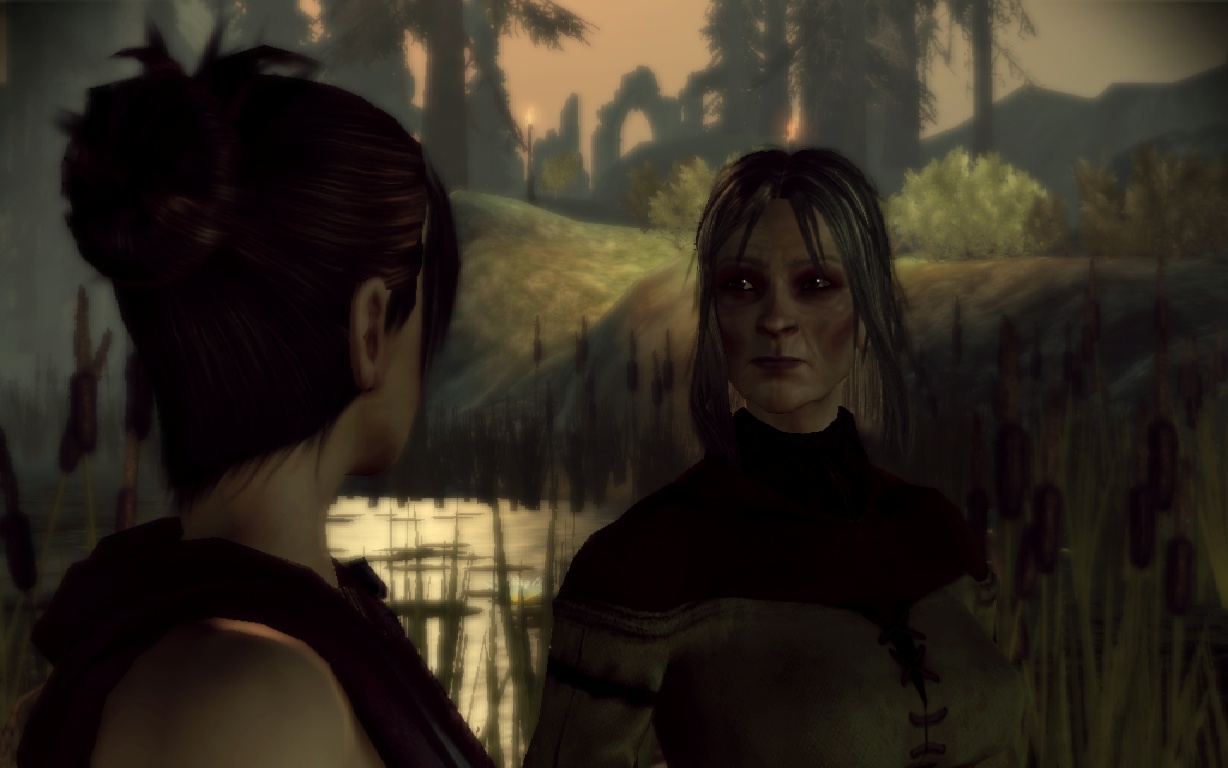
Confession: I would welcome an entire DLC where I did nothing but ask
Flemeth questions while gazing adoringly. Because, come on, it's FLEMETH.
SHALE: Ah, well. Enough talking. There is a burning city to invade... or something.

SPOILERS for all of Dragon Age: Origins!

Dragon Age: Origins is vital to the Dragon Age universe as the keystone upon which its universe rests. For many, many fans it still represents the pinnacle of the series in terms of daring and darkness. I love it too,  for its thoughtful and complex character choices, its challenging RPG gameplay, and (most of all) for its ability to create a truly original and deeply immersive high fantasy setting unlike anything you'll find anywhere else.

While there are perhaps faint homages in the Grey Wardens to George R. R. Martin's Night's Watch in the Game of Thrones series, or a slight tip of the hat to "Buffy the Vampire Slayer" funnyman Xander in perpetually hilarious (and clueless) Alistair, those inspirations don't change the fact that the world of Dragon Age: Origins really feels like something new in high fantasy. It takes the basic required ingredients—elves, dwarves, humans, dragons, nobles, demons, even enchanted forests—and discards the cliches, the obvious tropes, and instead creates something genuinely grim, gorgeous, thought-provoking and new. The conflicts are original and believable (we're still arguing mages versus templars even all these years later), and the magic system, tied to the Fade for good or ill, is sublime.

Thedas is not Middle-Earth, nor is it your usual pallid, veiled fantasy knockoff. And (thank goodness) it's not Westeros, either. 

Instead, it's something darker, wilder, less grand and solemn, but also rich with both light and darkness. The Grey Wardens are actually more self-sacrificing, thought-provoking and interesting to me than the Night's Watch (not to mention less rapey and sexist), and what Gaider and the writers created in Thedas with the threats of the Blight, the Darkspawn, the Archdemons, and the hints of a catastrophic vengeance upon the world by none less than the Maker (God) Himself offers breathtaking scope and a wonderful tapestry against which to set events. No wonder the series has not only supported a massive game trilogy, an assortment of DLCs, and over a dozen novels, graphic novels, and other explorations—Thedas is complex enough to support all of this and still feel like we've barely scratched the surface.

As a way of saluting Dragon Age: Origins and its creativity, I thought it would be fun to take a look at all the main quests in the game, as well as the most notable side quests, and then rank them from worst to best. (Keep in mind that even the "worst" quests in DAO are wonderful—there are no losers here!)


After the Joining
Hi Duncan! Hi Cailan! Bye, Duncan! Bye, Cailan!
This isn't the most exciting quest in terms of game activity, but it's still one of the most important story beats across the entire trilogy, as here's where we get to meet the doomed, gallant and foolish King Cailan, and where we also get more insight into Loghain, as well as Duncan. We also get a glimpse of Uldred here, who figures so importantly later on after the events at the Kinloch Hold Circle Tower.

Elora's Halla
I don't know why this little quest, in which we must diagnose a sick halla when visiting the Brecilian Forest Dalish encampment, moves me, but it is never one I skip, and I always look forward to it. As someone who loves the rich and tragic story of the elves across the trilogy, perhaps it's simply that we get to spend a few moments with one of my favorite creatures, the halla (the white deerlike creatures with graceful, twining silver horns). Or maybe it's that we have the opportunity to rescue an animal. Either way, I always calm the halla—I know we have the option to get Elora to kill it, but that's never happening on my playthroughs!

Notices of Death
My inclusion of this makes me an absolutely horrible person, but it's a questline that's wittily written and that manages to be both cringeworthy, poignant, and hilarious in the worst way.

Here, we're given the quest to deliver notices of death to the family members of several fallen soldiers. And if we get our companions to do it for us, the results are priceless. Alistair, Wynne and Leliana are predictably kind and heartfelt (Alistair's especially always gets to me: "I hope you like heroes, my lady, because your husband died like one"). 


But the rest of our companions? Um, let's just say tact is in short supply:
STEN: The man you love has died. It seems you could have chosen better.
ZEVRAN (cheerfully): Your husband? Dead. It was horrible. And so forth.
OGHREN: So... You know that husband of yours? Dead. Sorry!
MORRIGAN: Your man is dead. Get over it.
OGHREN (happily): Er, um, oh... Good news, lady. You're single!


This moment where I ask Flemeth to adopt me never ends as well as
I'd hoped it would. (And yes, Morrigan totally supports the idea.)
The Grey Wardens' Cache
It's not the most exciting moment, but I do have a fondness for this quest because it introduces Morrigan and Flemeth, two of the best characters across the game (and across the trilogy itself). We
also get our first battle with Darkspawn hordes, and learn more about the Grey Warden treaties and what effect they may have on the political intrigues involved. But mainly I'm just thrilled at our first glimpse of Flemeth's hut. Otherwise, it's not as exciting as some of the others for me.

Joining the Grey Wardens
This quest is a strong introduction to the Dragon Age world, providing us with the opportunity to begin to soak in the atmosphere of Thedas by showing us around Ostagar and giving us the chance to meet and interact with a variety of characters who will be important either personally or symbolically in the story to come. It's where we meet Loghain for the first time, along with Wynne (if we aren't starting out as mages), as well as Alistair, and recruits like Jory and Daveth, who will have heavy symbolic importance shortly as well. From a writing standpoint especially, I loved this early quest, because it sets the stage so beautifully for this world and its characters.

A Mother's Hope
This quest, in which a mother, Filda asks us to search for her missing son Ruck in the Deep Roads, is one of the most memorable across DAO for me. It's just so well written and acted, it's genuinely emotional, and it's a great example of how even a few moments with a character can live on in our memories.

As you might expect, alas, we do find Ruck, and his situation is heartbreaking. Lost in the deep caverns and ruins of Ortan Thaig, Ruck has been corrupted by the Taint after subsisting on the flesh of Darkspawn in the tunnels. His mind is now mostly gone, yet, tragically, he is aware of his situation and his conversation with the Warden is devastating, as he is both grateful if sympathy is offered and ashamed of his circumstances. This encounter can have several different endings, in which Ruck is killed either in self-defense (if we say something to instigate an attack), or in mercy. We can also leave Ruck alive to continue his tragic existence just as before.

I admit it, the moral quandaries of this particular quest really made me think. I didn't want to kill or hurt Ruck, especially after having a conversation with him (if we're courteous and use high persuasion, he is touchingly grateful for even the smallest kindness). And yet it was equally terrible to leave him to die slowly, mad and alone in the darkness.

I've played through options where I killed poor Ruck—regretfully, and because Zevran was in the party, as Zev's dialogue in that scene causes Ruck to attack and gives us no choice. And I've also let Ruck return to his hoarding and his pitiful and mad existence. No matter what, I always do what he asked, and tell Filda, his mother, that we found his body far beneath the earth.

It's a great example of how rich and satisfying Dragon Age can be. We spend perhaps five or ten minutes with Ruck in actual game-time. But I still vividly remember him and pity his fate.

The Mabari Hound
And here's my first Warden with our faithful rescued mabari companion, who
has just torn out the throats of half a dozen enemies and is now waiting
for much-deserved treats and cuddles
.
Okay, this isn't a major quest but COME ON. RESCUE THE DOG. Unless you are a supervillain in training or simply have no heart, this quest is a definite must, and it provides an informative and fascinating introduction to the importance of the mabari hound to Ferelden life and culture (Fereldans, you will soon learn, adore their dogs). Also, if we do this and save the blighted hound, we get our adorable and brave mabari (whom I always name Barkwise), also known to fans as Barkspawn. Barkwise is a wonderful character who brings out the best and funniest moments in many of our companions (particularly Sten and Morrigan), and he's also a brave and useful fighting comrade as well.

Lothering and the Imperial Highway
This questline isn't as dramatic as some but still, it's easily one of the most vital in the entire DAO game (or indeed in the entire Dragon Age trilogy). It's where we meet so many unforgettable characters for the first time, both featured characters in the story, as well as companions who will have incredible impact across the trilogy.

Most of all, this quest is always a highlight for me upon replay because Lothering will very soon cease to exist. With only a few exceptions, everyone we meet in the village is doomed, and it's genuinely upsetting to look back upon. Meanwhile, this is where we see what Loghain's plans are for Thedas, and we get our first glimpses of both Bann Teagan (also known as Hot Young Teagan) as well as of Cailan's widow and Loghain's daughter, Queen Anora, as well as our stalwart friends Bodahn and Sandal. And of course, Lothering itself is where we meet two incredibly vital potential companions -- Sten, and Leliana.

I still remember the jolt I felt when my party left Camp and Lothering was... gone. Just a skull on the map. It still gets to me, years later. And does so in every playthrough.

Tainted Blood
This quest starts out as seemingly harmless, requiring our Warden to fetch some necessary ingredients around the area, but it quickly becomes apparent that the Joining Ritual ahead is something to fear. That sense of foreboding increases throughout this quest and becomes palpable as the time of the ritual approaches.

My favorite thing about this quest is how it seamlessly introduces us to the solemn and terrifying stakes faced not just by the Grey Wardens, but by those who seek to enter their ranks through the tense and solemn Joining ritual. The stakes are high. Most fail, and people die right in front of us. The sudden deaths of people we'd just spoken to and begun to care about is a shocking occurrence but it's also the perfect example of how Dragon Age: Origins pulls no punches. 

Bad things can happen, and they often do, as in life, even to those who don't deserve them. In other words, it beautifully sets the stage and lets us know that Thedas is not a place for the faint of heart.


You've just woken up with Alistair alone, caged, and in your underwear.
Needless to say, it's a scenario that can go several ways. Although
probably not the way you'd want them to
.
Captured!
This entertaining and slyly funny questline is part of the larger series of quests relating to The Landsmeet, and is one of my favorites across the game. It happens after we surrender to Ser Cauthrien after trying to rescue Anora (and don't even get me started on Miss Thing's immediate betrayal there), and we're subsequently captured and imprisoned at the impressive Keep of Fort Drakon.


While there are a variety of potential story progressions and outcomes here (including the potential to elude capture at all, or to wait for rescue), for me it's most fun if we get captured and end up at Fort Drakon, and then decide to rescue ourselves. Thus far, I've always ended up getting imprisoned with Alistair, and the hilarity of waking up in your underwear next to a blushing and underwear-clad Alistair is actually even funnier if you aren't romancing him. We then have to sneak, charm, bluff, cajole and fight our way to freedom out of the prison and through the castle, and it's tons of fun.

Alternatively, it's just as much fun if you wait for rescue (if you're captured alone, you can choose your rescuers). My favorite rescue team by far is that of our beloved mabari (Barkspawn!) and Sten (I know, I know, you're shocked), who banter back and forth like a classic buddy-cop movie. Sten frustratedly argues with the dog and then is disgusted with himself for... arguing with a dog. "I have been in this country too long," he admits to Barkspawn (continuing, it should be noted, to talk to the dog). Barkspawn simply pants happily in his face. 

Then he and our canny pup bluff their way in (with a downright Shakespearean canine performance by our faithful mabari in which he pretends an illness so vile the soldiers simply want him out of the way). Sten, not to be outdone, actually manages to bluff the female guard there, getting her to realize that her life's ambition has led her to endless boredom. "Are you a soldier? Or an ornament?" he asks her, and sure enough, within thirty seconds she nopes out of there and questions all her life choices. 

SIDE NOTE: I feel like, viewing this, Sten would be a surprisingly good (if tough) life coach. He would view my book-filled and slightly cluttered apartment, for instance, and ask, "What is this? Are you a hobbit? A scholar? A weak creature seeking comforts in its cave? Or are you a warrior?"

"I'm a hobbit," I would answer sheepishly. 

"Parshaara."

"Sorry."

"A warrior does not apologize. Once more, you sadden and befuddle me," Sten would probably retort. And then he'd march out, and a few days later I'd get a bill for the remaining life coach sessions. But he'd still Fedex me a sword to remind me of my inner hero. Or so I like to think.

Anyway. My favorite part of this scene, by the way, is that after they progress further into the Keep, Sten then turns to Barkspawn and says, in total seriousness, "Be ready. These soldiers will not stop to listen to stories." I love that Sten pretends not to acknowledge our dog's intelligence, but in the end, he is one of the few party members who treats Barkspawn with absolute respect and seriousness. It's kind of charming.

This also means that I may or may not picture Sten, when he's secretly playing with kittens, as also giving them life-lessons, telling them soberly: "You are small but brave, little feline, and you are the match for any mouse. Never doubt it. Act without fear and with complete self-confidence and the rodent will be yours."

Broken Circle
Written by Sheryl Chee, this is without a doubt one of the creepiest and most effective quests in DAO, as we arrive at the Mage Circle tower at Kinloch Hold only to realize that the worst has happened, and that the Tower has been taken over by demons, Abominations and corrupted blood mages.

So... hey, Cullen... um... so... glad you're okay. Sorry you were tortured. But,
to quote K in Men in Black: "Hire a decorator quick, because... DAMN."
The quest is both incredibly atmospheric and genuinely disturbing as we see the devastation wrought upon the tower, room by room and floor by floor. It's especially poignant if we're playing a Circle Mage origin, because we're returning home, in many ways, only to see it destroyed. This quest can also go horribly dark in many ways, resulting in the deaths of Wynne, Irving, and (if our Warden agrees with a traumatized and brutally vengeful Cullen) the slaughter of the entire mage tower. As occurs in each chapter in the Dragon Age trilogy, you'll have to choose between mages and Templars, and as so often occurs in Dragon Age, this is one of those moments where your decisions are irrevocable. And even years and playthroughs later, it's still incredibly disturbing that our sweet Cullen is so utterly willing to raze the entire Circle and the lives of its mages to the ground.

Meanwhile, I know many many, many people out there hate the "Lost in Dreams" aspect (the dreaded quest sequence in the Fade), but I have to admit that while I get how frustrating it can be... I kind of love it. I love being able to play all the different physical beings, and going from being as timid as a tiny brave mouse, to being an eternally burning figure, a stone golem, and more. 

Just one request for Bioware though: At some point, aside from our brief excursion with Solas in Dragon Age: Inquisition, couldn't we actually play... a happy Fade? The fun Fade? Where it's always Christmas and witches give us treats and lemonade?

A Paragon of Her Kind
So, um, feel free to throw things at me but... I HATE the Deep Roads in DAO. Haaaaaate. Precisely because of how beautifully they're designed and rendered. They feel too dark, too grim, too gross, too terrifying, and too real. But this is a fantastic quest chain, starting in a wonderfully dark and well-rendered Orzammar, and it's an unforgettable introduction to the underground kingdom of the dwarves, in a beautiful and richly woven story and series of quests written by Lukas Kristjanson and Jennifer Hepler.

Here, society is governed via a strict and often brutal caste system, and where the highest born never see the sun. And at the bottom of the pyramid? The poor casteless, who are brutally tattooed at birth and who may never rise above their stations and most of whom are overwhelmingly cursed to lives of misery and bare, brutal subsistence.


Oh, Harrowmont, Harrowmont. You frustrate me so.
As with the rest of the game's story and details, Orzammar and the dwarven kingdom is beautifully envisioned, and it is yet another example of how the Dragon Age universe manages to encompass high fantasy elements and archetypes, yet with real imagination and uniqueness. Dragon Age's dwarves are not those of Tolkien—their lives are sadder and more strictly governed, in some ways, and perhaps pettier too, and yet Dragon Age's dwarves do feel rich with potential. They don't have to avenge lost kingdoms, but are mostly seeking to simply rise to a way of life that is sustainable and comfortable. There's not quite that sense of grandeur in Dragon Age's dwarves as in Tolkien's, and their plight isn't as obviously tragic as those of the elves, but there's still a rich and powerful sense of real pathos and loss.

It's terrific, and it's every bit as rich and fascinating as the worlds of men and elves to which we've already been introduced. And we're thrown right into its politics and corruption, as well as into the dreams and yearnings of those who live there. We help to choose a new leader in a deceptively complicated choice—do we pick noble, yet frustratingly conservative and out of touch Harrowmont? Or sneaky, unlikable Bhelen, the corrupt progressive who may nevertheless usher in a better world for the casteless? We meet potential companion Oghren here, as well as potential future notables in the series like wonderful Dagna (and let's not forget Leliana's potential nug companion Schmooples!).

This questline's fantastic series of explorations culminates into our entry into what is surely one of the most loved and hated sections of the game (along with The Fade): The Deep Roads, the terrifying network of caves and chasms that takes us out of the world of dwarves and into the abyssal haunts of demons and Darkspawn. And despite a trilogy of visits, for me the Deep Roads are never more terrifying than here in DAO, when we must travel with our brave companions through a near-endless series of dark twisting caverns filled with rotting corpses, Darkspawn, walls that pulsate with living evil, and monsters too terrible and tragic to look upon... the Broodmothers. (I won't even go into poor Hespith's terrible and deeply disturbing chant that outlines the sufferings of the women used by the Darkspawn to become the Broodmothers, but let's just say that it haunted me for days after I played it.)

And then there's Branka. Oh, Branka, crazy, terrifying Branka. The Orzammar paragon and Oghren's ex (and Hespith's, whom she brutally betrayed for her own ambitions). Who, it turns out, is set on using the Anvil of the Void to create an army of golems, in opposition to Caridin, the ancient paragon golem attempting to atone for his past sins. Once again, this encounter is wonderfully written, rendered and performed, and is fraught with potential tragedy, as depending on our actions, we can either support Branka's insane agenda (dooming Shale, if she is present, and who will fight and die against this choice), or we  can support Caridin and the more obviously moral choice. 

We then end this questline with the coronation of the dwarven king we supported, and it's a testament to the game's writing that even this moment is both painful and satisfying no matter who we choose. When I chose Harrowmont, I winced. And when I chose Bhelen, I winced even more (even though I knew it was right).

The Tower of Ishal
This race to light the beacon for King Cailan is one of my favorite early quests in DAO—it's exciting and pulse-pounding, and it really feels like our Warden is attempting to accomplish something epic (I felt like I was trying to light the signal-beacons in Gondor for a moment). It's also a terrific and more in-depth introduction to Alistair as a character in all his humor and bravery and innocence, and the combat as we attempt to fight our way floor by floor up the tower is genuinely exciting and challenging. 

And then it ends with one of the most striking and tragic  cutscenes in the game—the resolution of the Battle for Ostagar, as Loghain betrays the King, dooming Cailan and Duncan before a tide of unbeatable evil. I can still remember the terrible resignation on poor Duncan's face as he faces the unstoppable tide overwhelming them... and I'm talking about PIXELS. In a GAME.

Sniffle.

Meanwhile, the denouement of the quest takes place after our rescue by Flemeth, and we get another fabulous scene in her hut, and then Morrigan grumpily joins our party. 

Honestly, I always exhaust all conversation options here, as anytime I can talk to Flemeth is a high point in the games for me. I talk to Flemeth so much, honestly, in every single scene, that I swear I have unlocked slightly magical powers because Flemeth will, at a certain point, roll her eyes at me and tell me to get back to the game, girl. Get on with it. 

This is also why this quest is tied for me with "Flemeth's Real Grimoire," in which we go back and either talk to or battle Flemeth in order to get her Grimoire for Morrigan (who is convinced Flemeth is planning to possess her in order to extend her own life). I battled Flemeth on my first playthrough (and honestly felt terrible about it), but have never done so again... not only is it not right (and more than a little cowardly of Morrigan), but I'd much rather talk to Flemeth than fight her, so I always exhaust every single conversation option here. Until she literally tells me to go away.

"But wait!" I cry. "I must know! What made you decide to get the Hair Horns after this? Was it a midlife crisis? A spur of the moment thing?"

Alas, Flemeth never answers. At least not yet. If she ever does, I suppose this means I'll have descended into a new level of Dragon Age psychosis. (Fingers crossed!)

The Arl of Redcliffe
Would you kill a child to save a village? Or damn a village to save a child? This is another standout quest, a classic written by the always-talented David Gaider, and that involves some hard choices for  our Warden, and it remains one of my favorite questlines in the Dragon Age: Origins game story. It's also a terrific narrative piece, and gives us a lot of additional potential information about Ferelden, about Alistair himself (and his potentially mysterious background), as well as about the Arl, and we also get more time with my darling Hot Young Teagan, as well as having important interactions with the possessed child Connor and with Teagan's wife Isolde. The outcomes here can have huge ramifications on the game's story progression, with the potential loss of Connor, Isolde, Jowan, the entire population of Redcliffe, and more.

And as all Dragon Age fans know, the inclusion of the immortal line from Isolde "Who iz dis wooooman, Teeeeagan?" automatically bumped it up even higher. Because, reasons.

So, yes, Shale is a bit grumpy, but can you blame her? Years of immobility
while pigeons pooped on her. It's a miracle her sense of humor is still intact.
The Golem in Honnleath
If you get The Stone Prisoner DLC for DAO (and please do, as Shale is a wry, powerful hilarious and utterly unique character), you'll have to complete this quest in order to get the rod that will free golem and potential companion Shale (currently frozen as a statue in the square) from her imprisonment. It's a visually beautiful and interesting quest, with memorable characters and an especially challenging demonic confrontation that, in the end, can go terribly and chillingly wrong. (Dragon Age: Origins has no problem at all killing off child characters, and proves it again here.)

I've played it through several different ways—in some, poor Amalia was irrevocably possessed by her deceptively adorable cat friend "Kitty" (who was actually a desire demon) and then killed, while in others, I loved being able to rescue her and defeat the demon, returning Amalia to her waiting father. Either way, this quest always makes me smile when I come across the amulet "Kitty's Collar" in Dragon Age: Inquisition (a sly remembrance of Amalia).

And hey, at least now we can free poor Shale from her endless torment by the evil pigeons of the village.

Nature of the Beast
Perhaps it's because I so often prefer to play elven protagonists in Dragon Age, but this spooky, complex and yet often beautiful quest is absolutely one of my favorites in DAO. Another major questline written by David Gaider, it provides a wonderful and balanced introduction to the Dalish, and gives us a series of gorgeous settings and dungeons in the Brecilian Forest and Ruins, and in the Lair of the Werewolves. The elves are wary and ruthless, and yet are also charming, courteous and sympathetic. The werewolves then turn out to be equally complex, both fearsome and savage, and yet also heartbreakingly aware of their cursed existences (I'm still broken up over the fate of poor Danyla). The final decision here, as is so often the case in Dragon Age, can be bleak and brutal, in which we side with the werewolves and slaughter the entire Dalish clan, or in which instead the werewolves are slaughtered themselves.

I love the character design of the Lady of the Forest, even if I also desperately
want to offer her a sweater. Besides, I have extras, since Morrigan won't
wear any of the ones I got for her
.
However, I personally prefer the outcome in which we convince Zathrian to confront the Lady of the Forest, and we get the outcome in which Zathrian admits to ending his vengeance, and he and the Lady of the Forest willingly sacrifice themselves so that the werewolves are cured and the hostilities are ended. The idea of forgiveness never gets old, and it's gorgeously rendered here. The Lady and the werewolves are beautifully designed characters (with the Lady's suggested nudity managing to seem more beautiful and wild than prurient), and the final sequence in which all find peace is just beautifully done.

The Landsmeet
Oh, the politics! The intrigues! Culminating in a confrontation that's tense, complex and downright cinematic, the Landsmeet questline, written by the superb Mary Kirby (Hard in Hightown), embodies everything I love about Dragon Age: Origins. The questline is witty, smart, and suspenseful entertainment, and it demands genuine insight and attention from the player to reach their desired outcome.

Personally, I always love main quests that are as much about plot and character as they are about combat, which is why I'm such a fan of DAI's "Wicked Eyes and Wicked Hearts" as our poor Inquisitor attempts to charm a ballroom full of jaded, cynical, Great Game-playing Orlesians.

It's also why I love this one, where we're reunited with so many characters we've met and interacted with before—Arl Eamon, Loghain, Arl Howe, Anora, Duncan, and more, and where the hard decisions come to fruition. In this instance alone, the story outcomes can include Alistair as King in a variety of potential marital states, remaining as a Grey Warden, executed by Anora, or disillusioned and drunk if Loghain is allowed to join the Wardens as penance for his crimes.

The Landsmeet is an incredible culmination of all our political maneuverings
 in the game, and the end of the questline is truly epic and emotional,
no matter what we choose
.
Me, I'm torn. I truly do feel for poor Alistair. But at the same time, the fact that he is so adamant, that he cannot abide by the recommendations of Riordan (his superior officer) in punishment of Loghain... to me this flaw is truly disappointing. I still love Alistair, but it's interesting to me that he, as a character inspired by Xander ("Buffy the Vampire Slayer") actually shares some of that character's weaknesses. Xander was charming, until you crossed him, and then he was easily at his worst... especially  whenever confronted with his own jealousies. Alistair definitely has shades of this to him, as well. However, in the end, I much prefer Alistair to Xander. Even in a single game, we watch Alistair mature and grow into real gravitas and responsibility, and (thankfully) he does so without losing his sense of joy or humor.

Something Wicked
This scary, atmospheric and tragically memorable quest in which we assist the saintly, blind Ser Otto in his pursuit of the mystery haunting the abandoned orphanage in the Denerim elven Alienage has definitely always stayed with me.

It's a suspenseful and interesting story, with an engrossing mystery at its heart, but for me what lingers is the classic horror-movie feel in the most traditional and gothic sense. I loved the gorgeously rendered atmosphere of the abandoned orphanage, with its barely-seen ghostly children dancing at the edge of sight, the evil giggles, the eerie weeping, the shadowy vestiges of violence everywhere... and worst of all, the sense that we might be able to bring peace here again, but we'd never be able to right the original and horrific wrongs that took place in this darkness.

We search, we fight, we triumph. Or so we think, when, of course, we're faced with the inevitable fate of the kindly and caring Ser Otto, which still makes me angry every single time. I WANTED SOMETHING GOOD, Dragon Age: Origins! Just once, give me something good and let poor Ser Otto live!

Dammit. Now I need roof-cookies.

The Urn of Sacred Ashes
This is easily one of my absolute favorite quests in Dragon Age: Origins because it offers a series of superb and diverse gameplay, combat and puzzle challenges, and because it effortlessly manages to communicate so much lore and history. It, like so many other quests in DAO, also has the potential to go terribly, horribly wrong, and at the end, depending upon our decisions here, Leliana and Wynne may not only end up dead, but they do so at the Warden's own hand. Sten, too, may end up departing permanently depending on your early actions in the questline, at Haven.

Primarily written by Sheryl Chee, this questline involves some incredibly atmospheric and interesting locations. Haven (which we'll see in very different circumstances again in DAI) is here an apparently sleepy little village in the foothills, but there's a creepy and palpable sense of menace, an almost Village of the Damned undertone that's wonderfully unsettling. Meanwhile, the ruins, caverns and dragon/wyrmling lairs are equally interesting, and the quest culminates in a superb and mind-cracking series of haunting scenes and beautiful challenges at The Gauntlet. One of my favorite moments in the game, and certainly an absolutely pivotal moment. After this quest, the next scenes at Camp can be both thought-provoking or incredibly sad.

Don't worry about the Archdemon, Hot Young Teagan! I'll protect you!
The Battle of Denerim
How often in your life do you get to command an army, lead a charge, and risk (or give) your life against a magnificent Archdemon in dragon form? How often, even in a game, do we lead armies, strategies warfare from attack wave to attack wave, or get to risk our lives, our companions, and our highest selves to save the world from an opponent that otherwise will devour it in darkness? How often do you fight a creature so massive that it dwarfs battlements and armies?

It's no wonder then, that this questline is truly the game's high point and centerpiece for me, and justifiably so. 

And my favorite aspect of this gorgeous final series of quests is how personal and fragile it all is. Just as crucial as the strategic aspect to the story (Landsmeet done, supportive factions put in place, and more), it's the emotional, friendship, and romantic elements to this story sequence that really tug at your heartstrings.

For instance, take those final sweet heartfelt farewells to our companions the night before! The moments when Wynne and Leliana express love and gratitude, when Sten reaffirms his affection and faith, when Zevran surprises us with his solemnity and emotion, are all wonderful, and reminders that Bioware has done something miraculous here with these scattered pixels—they'e turned them into people we care about.Then we're faced with more emotional obstacles, including our potential conflicting feelings of happiness (or ickiness) at performing the Dark Ritual with Morrigan! And that final goodbye to our sweet Barkspawn if we don't take our faithful mabari along for the final battle (the little worried whine our mabari gives there just kills me)! 

Sigh. So much fantastic dramatic fodder.

And let's not forget all the clever and strategic ways we can utilize the Dalish, dwarves, mages, Templars, and more who support us—as the culmination of all our diligent combat, strategic, political and ambassadorial work throughout this past year in Thedas. Let's definitely not overlook the wonderful fact that we can (if on PC) even actually support and help to preserve the lives of so many vital key characters we've met and saved before, and who now fight alongside us, including First Enchanter Irving or Knight-Commander Greagoir, Hot Young Teagan, Arl Eamon, Swiftrunner (or Zathrian), and more.

But the lasting elements to this story moment are the romantic, political, friendship, and intimate alliances we've built over the past year of Thedas time between our brave Warden and their companions.

By the end of Dragon Age: Origins, we've lived an epic. We've razed the ground if we were ruthless and hard, leaving companions dead behind us in service to power or ambition, or we've championed the best in all of us and earned the love of those who fight beside us, so that even hard, cynical Morrigan professes her love or comradeship, stoic Sten quietly calls us by the endearment "kadan" ("Where the Heart Lies" in Qunlat), and even Shale hesitantly admits she'd be bummed if we got squished. Our Warden may have sacrificed themselves for the good of all Thedas, or taken Morrigan up on her offering of the Dark Ritual so that the final blow against the Archdemon did not take a life in sacrifice. Yet this is the end of the journey, and the final moment before the bittersweet partings.

As always, this quest is a reminder that what makes these games so fantastic isn't the gameplay (no matter how consistently good it is) but the nuanced and complex writing, the heartfelt and versatile acting, and the feeling that at the end of our journey (for me at least) our protagonist, if they survived, did not do so alone. They are known, fully, flaws and all... and they are loved. But then again, I'm always a sucker for stories of scrappy misfits and their self-created family units (Mass Effect 2, I'm looking at you).

Which quests in Dragon Age: Origins were YOUR favorites? 

Saturday, February 3, 2018

The Inquisitor's Seduction: Romancing The Iron Bull, Part 1

Bull's romance is something completely different from almost any other
RPG romance you'll encounter. In a great (if slightly surprising) way.

THE IRON BULL:
Qunari love our friends like anyone does, but we don't have sex with them.


Spoilers for all of Dragon Age: Inquisition, as always!


You never exactly think an RPG game is going to challenge your beliefs, assumptions, or your perceptions of real-world relationships... but then there's Bioware. And Dragon Age. And the somewhat controversial, yet terrifically drawn romance, for instance, between The Iron Bull and the Inquisitor in Dragon Age: Inquisition.

First, a little backstory: Bull's romance was the first one I ever played in DAI, And it certainly offers complexity, maturity and candid sexuality in spades.
I still remember when Bull showed up in his first scene at the Storm Coast. It's still very clear for me, because I looked at him and felt a few conflicting things immediately: Disappointed regret, alongside paradoxical interest. Regret, because I instantly wrote him off as a romance. I'm not into super-muscular guys as a general rule in real life.

And yet I also felt a little fascination too. Because, while Bull was massive and musclebound and slightly loud and disconcerting, he was also so interesting visually, and wonderfully unpretty! He had these strange horns. He was scarred everywhere (seriously: everywhere) and slightly scary, with an eyepatch over a missing eye. His body managed to be powerful but the muscles actually weren't traditionally beautiful, more utilitarian. His face was all angles and edges, like his humor. He just wasn't handsome, and in fact he bordered for me (at the time) on being downright homely.


When it comes to his romance, Bull's entire persona is about drawing
you in. He doesn't pursue you... he gets you to pursue him
.

Reevaluating Bull
Then my Inky talked to him, and I was tempted again. He had a rich, deep and beautiful voice (thanks to the always talented Freddie Prinze, Jr., who was a total chameleon in this role), and whether I found Bull attractive physically or not, when he spoke I melted a little. And he was smart and seriously funny. And better yet, he also seemed to be charmingly transparent, and (awesomely) like the Worst Spy Ever. All pluses in my book.

(I KNOW, right? I was so, so young.)

Although, in my own defense, not finding Bull handsome was, weirdly a plus for me. I liked it. So I paused and thought about my adorable princessy blonde Inquisitor and went, "Wait, wait, I've got to romance this guy... It's like Beauty and the Beast! He even has horns!" (I write a lot of fantasy novels and stories with fairytale elements, so that was catnip to me... I'm weak that way.)

Besides, I was kind of intrigued. I'd played lots of RPGs and romanced plenty of obviously beautiful people in Bioware games: Alistair, Zevran, Thane, Liara, etc. Maybe it would be fun to romance this big hulk of a guy who wasn't obviously gorgeous. And besides, he was so smart, funny and interesting! Most of all, he seemed like he'd be fun. I was playing a big huge adventure game, and a romance with a little fun sounded just perfect to me.

So within a few hours of gameplay and conversation, I reconsidered my immediate decision not to romance Bull, and flipped back just as fast to "Huh. Wait. I totally need to do this."

With this thought, I dismissed my earlier flirtations with Solas (who'd been an unexpected and genuine temptation because of his smarts and smoothness) as well as with Cullen (who's luckily gorgeous because his flirts made my own real-life disasters look positively elegant and Clooney-esque in comparison), and off I went.

I'd decided.

I was going to win the heart of The Iron Bull.


Since my very first Inky was an ice princess outside and a jokester inside,
I adored her pairing with Bull. And visually, it was the perfect fairytale
.
Second Impressions

When I began to romance Bull in DAI, however, one thing that I discovered fairly quickly is that I got taken, my friends. Because once you get talking to Bull, he's not at all the simple, slightly silly, open-book guy you thought you were recruiting. He's quiet, genial but cool, he's adept at keeping people at arms' length, and he's a heck of a lot smarter than he first appears.

And while I may have found Bull ugly in my first few meetings with him, I soon realized that I was in a decided minority on that front. Bull offered his own charms (and knew it), and thousands across Thedas were already desperately dialing him up, going, "How YOU doin'?"

In other words, my initial dismissal of Bull's hotness was, frankly, pretty hilarious.

More Than Meets the Eye

The best part of this dawning awareness was that it quickly and completely dismantled my initial take on his romance, which had been (somewhat naively) that Bull would be easy to catch, and that he'd be a rather kooky, funny romantic object who'd be, well, happy to have the attention.

Writing this today, I find the idea that I ever found Bull to be even remotely simple as a character to be pretty laughable. However, it was definitely entertaining to start to realize just how wrong I was, as Bull talked to my Inquisitor and carefully pieced out those tantalizing little bits of information about himself and life under the Qun.

All too quickly, meanwhile, I began to really like the guy. I began to recognize the other aspects to Bull that were so irresistible to others—and believably so. He wasn't just sharp and crudely funny, he was also capable of considerable subtlety and charm. He revealed himself to be downright brilliant when it came to reading people, and he was also possessed of an incredible amount of charisma and self-confidence. Maybe he wasn't conventionally beautiful to me, but I began to find myself looking for his reactions in all our scenes and cutscenes. A few overheard conversations around the Inquisition further communicated that Bull was fabulous in bed, had zero hangups about sex, and was both respectful, discreet and accomplished in that arena.

Hearing the discussions about these dates, this was where my Inquisitor began to evince actual jealousy and soon went from casual interest to basically throwing herself at Bull on a constant basis. I had her take every available chance to talk to Bull, she took him along on missions, and she flirted incessantly with him. I had her do all of this with a yawn, secure in my assumption that eventually he'd respond with a knowing wink or a rascally kiss and off they'd go.

And then I began to realize the horrifying truth: that Bull might flirt with the world (and sleep with a decent contingent as desired), but he was utterly uninterested in my Inquisitor's attempts at flirtation.

Panic ensued.

The Iron Bull Slightly Freaking Approves

As I mentioned here, when you flirt with most characters in Dragon Age: Inquisition, they respond in a variety of ways, and they're almost always interesting, funny and charming. Cullen, Cassandra, and Josie are adorably flustered by the attention (as is Blackwall, albeit more broodingly and beardily), while Solas and Dorian are much smoother and cooler (as, somewhat surprisingly, is Sera). Cole, Viv, and Varric are all unromanceable (especially tragic in Varric's case, given his wit, handsomeness, and that always-fantastic chest hair).


Bull is the only character in the game who doesn't respond when we flirt
with him. I mean, at all. We get a "slightly approves" and that's it.

But the point is, everybody else responds. Everyone. They react visibly to flirtation and attention. Solas parries your flirtations smoothly with a surprising amount of sophistication and sly sexiness, even as you can tell he's totally falling for your Inquisitorial cuteness (if you're elven). Sera is amused but interested (if you're female). Dorian is charmed, yet cautious (if you're male). Cullen looks mortified yet even mysteriously more ridiculously handsome as he tries to disappear into his own armor. Cass makes noises, growls, draws her gorgeous eyebrows and looks suspicious, but eventually she's hilariously flustered at almost Cullen-levels of adorable awkwardness.

Not Bull. He doesn't say a word. Not once. No change in expression beyond, occasionally, the slight smile that goes along with the notification that "The Iron Bull slightly approves."

Slightly approves. And I was using all my best flirts.

The angels wept.

In all seriousness, for me, The Iron Bull's crushing lack of response to our flirtations may be maddening, but's also absolutely true to character. And for me it's one of the smartest, funniest and most perceptive aspects of his romance, for a number of reasons.

This is because Bull's situation is more complex than it appears. He might be the freewheeling pansexual dynamo yearned after across Orlais, Haven and Skyhold, but he's also a man on a mission.

His loyalties, in other words, are complicated, to say the least.

Sex, the Qun, and The Iron Bull

As far as his baseline goes, Bull is certainly uninhibited, famously skilled and casual about sex. He has zero hangups or shame associated with consenting sexual behavior between adults of any gender or race, as, under the Qun, sex for Bull, as for almost all Qunari, is something purely, solely physical—a need to be filled, an itch to be scratched. It's an act, for many Qunari, which is usually accomplished by their Tamassrans, who treat these interludes almost clinically, as sex workers. Beyond that, there's no romantic love or long-term commitment recognized under the Qun, and those under its regime live existences in which their sex lives (and choices) are often, in fact, not their own, as different pairs of men and women are frequently matched up solely for breeding purposes.

It's all just part of accepted life under the Qun, as Bull notes in an early dialogue with a curious Inquisitor:

Bull: Qunari love our friends like anyone does but we don't have sex with them.
Inquisitor: You don't have sex?!
Bull (laughing quietly): Oh, we definitely have sex. There are Tamassrans who pop your cork whenever you need it. It's not a big deal like it is here. It's like, I don't know, going to see a healer. Sometimes it's this long involved thing, it takes all day, leaves you walking funny. Other times you're in and out in 5 minutes—"Thank you, see you next week!"
(Later, after the Inquisitor asks more questions...)
Bull: No drama. (Pause) Still, it's more fun here. Fewer rituals, more making it up as you go along. Plus, you folk have redheads. Redheads.
After childhood, Bull spent years in the Ben-Hassrath, where he would have learned to use sex as both an enjoyable outlet for pleasure and stress relief as well as, of course, as just one more valuable psychological weapon. I then assume that he further honed his skills in the bedroom during his decade in Orlais as an undercover agent, where (according to the DAI Codices), his sexual escapades were the frequent and notorious topics of avid interest, speculation, envy and discussion among the nobles there. As I've noted before, I also think this is where Vivienne would have picked up on him as a player of the Great Game, and become an amused admirer of his subtlety and gamesmanship from afar.

It's no coincidence that Bull (here flanked by his loyal Krem at left) always
positions himself in the best place for picking up news and gossip. In Haven, he's
between the outer gate and stables, able to see and hear pretty much everything
.
The Quiet Strategist

When Bull joins the Inquisition, he seamlessly installs himself as a fixture near the central areas of gossip and discussion, every time. It's beautifully casual, and such a smart and appropriate character note. At Haven, he's between the main gate and stable at the outer wall, right where he'd be able to observe who's in and out on missions (as well as viewing plainly their moods and reactions), and he'd also be able to overhear plenty of important conversations without alerting suspicion, as well (Note: I previously and incorrectly said he was outside the Chantry—many thanks to Elana for the correction!). He installs himself into an even more ideal spot later on, in the Herald's Rest at Skyhold, where he also becomes an enthusiastic participant in its social life.

But as far as Bull's romance, at Haven, almost immediately we overhear accounts of Bull's casual bedroom encounters in a few funny, eavesdropped conversations, as well as through discussions with Bull himself once we reach Skyhold. He's obviously not lacking for company (and by all accounts he's also, ahem, a pleaser—which certainly fits with his core personality as someone programmed to give people what they need).

Yet here he is, barely responding when the Inquisitor, possibly the hottest, bravest, most fascinating person in Thedas (let's just assume it's a given, right?), flirts with him over the first several months of his time with the organization.

Why?

Like I said: He's not looking for a date. He's a man on a mission. And he's playing the long game.

The Devastating Attractiveness of Complete Disinterest

I was, of course, as frustrated as anyone else when I realized that The Iron Bull wasn't going to fall at my Inquisitor's feet. And yet, the fact that he didn't do so quickly became part of the fun. I became increasingly intrigued... then realized that this is exactly the reaction Bull's aiming for. And now here I was, making constant heart-eyes at this big, bluff, funny ox-man and waiting for him to finally notice my protagonist character. To quote "Buffy the Vampire Slayer," the subtext was rapidly becoming text. The psychology of Bull's romance—and the accuracy of its eye on human nature—was a lot of fun, even as I found myself amused at my own reactions to it.

Remember—at first, I'd found Bull somewhat ugly—striking and imposing, sure, but not beautiful (aside from that gorgeous deep voice). Then, like I said, I'd started actively pursuing him, and somewhere at about the 30% mark of the game, a number of things had happened:


  • I was no longer remotely interested in romancing anyone else
  • I'd forgotten why I ever found him ugly
  • I was hanging on every conversation with him like a wistful groupie
  • I'd realized he was not just the big lug with the ax and the mug of maraas-lok, but that he was actually one of the smartest, subtlest, and most perceptive characters in the game (rivaled only by Solas and Leliana).
And despite dozens of hours of adventuring by my adorable Inky (several months in Thedas-time), Bull scarcely returned her glances.

It was downright depressing.

But, true to human nature since time immemorial, of course, with every disinterested look or implied shrug, I just fell harder. The result was that my Inquisitor was energetically throwing herself at Bull by the time we got to Skyhold, and—of course—(at least mentally) writing his name in her Inquisitorial parchment-notebook with lots of little hearts and arrows and cute curly initials everywhere.

And the thing is, I loved it. I loved the fact that I was playing for a character who suddenly found herself frustrated and insecure, who wasn't being handed her desired relationship on a silver virtual platter. Suddenly, and gorgeously, Dragon Age: Inquisition was defying my expectations. While I'd loved the other two games, nobody here was handing me roses or making speeches about how hard it was to resist my charms. Instead, its relationships were challenging, complex and frustrating. Just like life.

Playing Hard to Get...

Meanwhile, as my Inquisitor went on casting pining looks in Bull's direction (inciting a few more paltry "The Iron Bull slightly approves" reactions, curses), she did all of the quests that would get her approval as high as possible with him in the meantime. So she helped the poor common folk of the Hinterlands, she did the quests that included valuable soldier's skills (like the horse races at Dennet's farm to demonstrate horsemanship), she decimated the dragon population across Thedas specifically for the additional approval from Bull (and felt more than a little guilty in the process), and waited for him to look her way.

And, bless her little heart, she waited a long time. Here's an approximate rundown of how many flirts Bull required before he made his move:

  • 2 flirts in Haven
  • 2 flirts in Skyhold tavern
  • 1 flirt at the dragon celebration (maraas-lok for everyone!)
  • 2 flirts on the rooftop (after "The Demands of the Qun," either outcome)
Now, these numbers are a bit fluid because Bull's interest is also absolutely predicated on approval numbers (not just flirts), and my Inky #1 didn't always choose outcomes or judgments Bull loved (he tends to approve the more ruthless, soldier-like, solutions). For instance, I know some players who are able to move forward with him almost immediately after arriving at Skyhold, while it took me a few dozen hours further. But I'd say that my experience was pretty common, at least, and I like what it says about Bull as a character, so I'm including the flirt counts here just for fun.

I mean, compared to Bull, most of our other love interests in DAI are pushovers—it takes maybe two or three flirts with Solas to get the Fade kiss (and we make the first move). It takes about the same for Cullen. The only other similar holdout in DAI is actually Sera, who is amused, but also surprisingly reserved, at interest from the Inquisitor, and who takes her own sweet time in deciding whether or not to trust them.

However, there are good reasons for Bull to behave this way that aren't just about playing coy or hard to get.

I mean, again... he's undercover. At least, to start.

And maybe for even longer than that, depending on our own loyalties and choices...


Think about it. If Bull openly sought the Inquisitor's affections, he'd be
met with skepticism or even outright suspicion (he is, after all, a spy). But
if he gets us to pursue him, his agenda is much easier to hide.
Secrets and Lies

As you already know from some of my previous analyses of The Iron Bull, my take is that Bull is reserved and circumspect for most of the game's first 30-40% because he's in a pretty complicated position as a potential sleeper agent. Therefore, it's all to his advantage for the Inquisitor to do the chasing. For him to chase the Inquisitor, he risks either alienating them or alerting suspicion.

Why is Bull so reluctant? Let's take a look at the big-picture possible reasons:

  • He may be understandably skeptical of the Inquisitor, the organization, and Thedas. 
  • He may be waiting you out to see what kind of person you actually are. 
  • He may be reluctant to complicate a professional relationship with a sexual one. 
  • He's cautious and it takes him awhile to become interested. 
Or... my take:
  • He's being strategic, despite being interested from day one (or at least attracted, because, again, see Inquisitor and most gorgeous interesting person ever). 
  • He's also under orders from the Qun to get close to the Inquisitor. 
  • He may even be under direct orders to seduce (or to attempt to seduce) the Inquisitor (and oh, I definitely think he is). 
  • He's got to proceed with caution—each step must be conducted perfectly (after all, we're talking about the Qun's goal of world domination, complicated by the added stress that the Rifts themselves pose a threat to the end of that world). 
For me, it's that second bullet list. It's simply a matter of Bull understanding human nature, and to a scary, almost microscopic degree. In other words, he's slightly cool and unattainable because that just makes him even more desirable to the Inquisitor. He can't exactly pursue the Inquisitor—doing so would be far too obvious, and it would immediately raise a few red flags (with Leliana, certainly, among others).

So Bull spends half his seduction game doing a careful dance—timing every smile, every discussion, every move. Always teasing forward, then edging back, drawing the Inquisitor in. Turning down half a dozen opportunities and simply biding his time.

In a more cliche-ridden story, the next step—Bull's seduction of the Inquisitor—would be a charming or comedic scene as Bull finally makes his move.

So it's interesting, yet again, that what's presented here doesn't fit into any of those categories. It's not charming. It's not light. It's... risky. It's dark. It's disconcerting. It may be hot, yes, but it's also, in fact, pretty cold.

Delicious, but cold. 
But more on that in the next part of my analysis... when Bull finally makes his move.

Thursday, August 31, 2017

"In Your Heart Shall Burn," Part 2: Finding Haven

NOTE: This post is part 2 of 2 in my analysis of the pivotal sequence of "In Your Heart Shall Burn" from Dragon Age: Inquisition. Read Part 1 here. 

And please note as always, that SPOILERS on major plot points and character identities will abound! 


We're only 10% into the game and already my poor Inky
needs a vacation. Perhaps Rivain?
So here we are... 

Enter Coryphypants. Pursued by a dragon.

Thanks for joining me. We're at the final stretch of "In Your Heart Shall Burn," as the Inquisitor then goes once more into the breach along with her brave companions, to fight the remaining forces, to stall Coryshits, and to wrangle that last trebuchet into position.

By the way, I think it’s interesting to note here that the Inquisitor isn’t the only one in this moment who’s actively willing to die for the village: So are our companions, whoever we brought with us.

It's never commented on, it's never acclaimed... but it should be, and it almost makes me wish we'd gotten a moment with our chosen final party, before we moved forward, although I guess this might also have over-weighted the moment a bit much dramatically so early in the game. Still, they're here, they're unswervingly loyal, they are willing to die to save the villagers, and it's one of the little memories that becomes incredibly bittersweet later on for me in Trespasser, if we don’t save the Chargers. (Think about it.)

Meanwhile, we predictably triumph (temporarily at least) in this crucial onslaught against the final waves of Red Templars (or corrupted mages, depending on your choices), and do we manage to wind up that last trebuchet to the proper position? Why, yes, yes we do.

Then the companions escape (unwillingly; they have to be ordered away), Cory arrives, and there’s that great confrontation over the Mark. And it’s worth noting that this is probably the most terrifying Corypheus is in the entire game—his entrance as a shadowy twisted figure through the fire is gorgeous, and his voice and aura of command are pretty scary (kudos to voice actor David Sterne).

But before we go on, I just want to share a specific scenario with you... 

A Brief but Vital Headcanon Break...

Walking through fire never gets old! Corypheus is probably
a real hit at parties, too: "GIVE ME ALL THE SNACKS."
This will sound nuts to some. But I always, always picture Solas as lingering here, driven to eavesdrop, and experiencing a pretty interesting if hidden crisis of conscience while doing so. I think he’s got to be hiding behind a nearby shed or wall to witness this conversation, perhaps protecting himself from the flames around him in order simply to listen. (Come on, he has to, right? How can he not?) And although it’s hidden from us on first playthrough, the one person this scene would matter most to—tremendously—would of course be Solas. 

So I absolutely think he’s present here somewhere, and listening—and it’s a fascinating thing to envision. If Solas likes our Inquisitor (or even feels the beginnings of love), he is aware that he is probably witnessing her death (and losing the Mark, the only way to seal the Rifts and heal the terrible damage he has inadvertently caused). His orb is right here only feet away, but in the hands of a pontificating madman—the orb that he used to start all of this to begin with.

Of course, if Solas is here, and listening… he’s probably not feeling all that great about himself right now. Deservedly so. What I wonder is... perhaps this makes him evaluate his situation, his choices, the things he's done that brought him to an utterly destroyed village on top of a grievously damaged world.

Perhaps he regrets these things. Perhaps not. Perhaps his only desperate thought is for the Orb (but I don't think so). Perhaps he even wishes he could join the Inquisitor in this moment of hopeless courage. Or perhaps (and this one is most likely, and what I picture)—perhaps Solas stays still and quiet, but rallies his slowly returning powers in desperation so that he can call the wolves to his will when needed most. Just in case he can still save the life of the person he has come to see as crucial or even beloved.

Villainous Monologuing 101

Now, back to the big moment, flames and all, when Cory confronts the Inquisitor, and while most of it is pretty standard villainous monologuing, I love the fact that it does go beyond that in a few key moments that betray Corypheus's own fears and anxieties (especially pleasing for me as a terminally anxious person—hey, even 1000-year-old demigods have 'em!).

The blocking of the action in the Corypheus scene is wonderful, by the way. I love the way Corypheus plays with the Inquisitor like a cat with prey, and how his dragon sort of circles itself around her, creepily, when she’s thrown to the ground.

Meanwhile, Corypheus’s monologue gets very interesting once he picks up the Inquisitor again, dangling her like a puppet:

"How YOU doin'?"
Corypants: It (the Mark) is meant to bring certainty where there is none.

I once breached the Fade in the name of another, to serve the old gods and the Empire in person. I found chaos and corruption, dead whispers. For a thousand years, I was confused. No more. I have gathered the will to return under no name but my own. To champion withered Tevinter and prevent this Blighted world. Beg that I succeed. For I have seen the throne of the gods… and it was empty.

This is it, his one human moment, if we look closely. It's telling that Corypheus only shows real emotion when he confides that he went looking to conquer the Maker “and the throne was empty.” Even a thousand years later, you can tell that Corypants still can't believe he got stood up. He's still offended by the Maker being a no-show to his “Let’s fiiiiight!” And terrified by that absence, as well... did the Maker simply abandon him (and us)? Leave? 

Or was He never there to begin with? How long, exactly, had that throne been empty?

This moment right here makes Corypheus a real person to me, a terrified child faced with an outcome he cannot accept. He even admits it: He was confused for a thousand freaking years. (Meanwhile, somewhere, Solas is smirking and going, "Really, dude?")

Darkness Inescapable

There’s a lot of very interesting additional lore stuff here that’s worth noting for future exploration—Corypheus is talking about the fact that, along with the Magisters Sidereal, he concocted a plan to enter the Fade, and from there, to enter and claim the Golden City (and the Maker’s throne).

Chantry legend says that when the Magisters accomplished this, the moment they set foot in the Golden City, their touch defiled it, and the Maker cast them out in rage and turned the Golden City black before turning his back on his children for centuries to come. It's a scenario that reminds me very much of Tolkien's mythologies from The Lord of the Rings and The Silmarillion, detailing the doomed attempt by the Numenoreans to conquer the blessed isle of Valinor (Elvenhome), and of how the moment they set foot there, the island vanished, the Numenoreans perished, and a great wave destroyed their island home, guilty and innocent alike.

However, what’s interesting about Cory’s speech here is that he’s implying that the city was already black… and that the Maker’s throne was empty. There is actual emotion when Corypheus admits this to the Inquisitor, by the way, and it’s fascinating—as I mentioned above, we’re witnessing the worst reality of the true believer—not that God was angry… but that God was gone… (a scenario that is also central to Tony Kushner's gorgeous Angels in America).

My name is Lavellan. You tried to kill my village. Prepare to
die. (Also, your breath is just terrible. Sorry.)
Again, this instantly makes Corypheus a more interesting villain for me than he perhaps appears to be for most. He wants something—not just to rule, but to understand, and most of all, simply to be acknowledged (something his arrogance demands). He's a selfish child, as noted later by Solas, one who demands answers and refuses to accept that the universe just doesn't provide them. Ultimately, just as with Anne Rice's vampires, Corypheus has aged, but he hasn't learned. He's trapped in the persona of who he was a millennium ago. He is the very antithesis of the Dalish curse Dirthara-ma ("May you learn"). Corypheus has learned nothing. He never will.

In other words, he’s still a fanatic, and a thousand years of imprisonment have only sharpened his resolve to rebuild the world (and heaven itself) as he sees fit.

Huh. Sound like anyone we know? (Cough.)

Farewell to Haven

Meanwhile, after proclaiming these revelations and tossing our poor Inquisitor around through this scene, which is especially painful if they're wee Cadashes (dwarves) or delicate and fragile-looking Lavellans (Dalish elves), we look up into the soft dark skies above the deeper shadows of the Frostback Mountains. And a miracle occurs, because there, faint and fragile, shines the brief spark of Cullen’s beacon. Our people are safe.

Which means we can now Unleash Hell. And after all of Cory’s evil monologuing, it’s satisfying when the Inquisitor is able to stand up straight, make a snarky comment, adjust their sunglasses, and set off that perfectly positioned trebuchet. (In my own headcanon, my hapless Inky may or may not have backed into it and knocked the handle, but the timing was still perfect! And of course accomplished in slow-motion...)

Either way, Boom goes Haven, and the Inquisitor (off and running in perfect action hero mode) is knocked into safety via an old mine shaft or tunnel, even as Cory’s wafted away undeservingly by his pet dragon in the nick of time, all while Trevor Morris’s magnificent score makes the entire moment even more dramatic and epic than expected as we wait to see what happens next.

A fragile flame in the darkness tells us our friends and
companions are safe. Eat it, Coryphyshits.
But let's take a moment. Haven is no more. It’s a beautiful moment of symbolism if you think about it. The destruction of Haven is important and symbolic. It means anything can happen; that no one is safe; that nothing may in fact be what we think it is. And by the end of Inquisition (and especially Trespasser), boy, is that true.

Meanwhile, we experience a slow fade through darkness, then the blazing of the Mark as it awakens the Inquisitor painfully, and in confusion, to isolation and a white snowy world. We're limping and sore and cannot move quickly. We can only stumble, slowly, seeking some kind of exit. We battle demons, discover the Mark's new powers, and then emerge into the lonely, snowy mountain forests.

May the Dread Wolf Guide You

There’s a Dalish saying: “May the Dread Wolf never hear your steps.”

But... we know him better now, don’t we? We don't mind him hearing. We trust him. We maybe love him. He might even love us.

And if our Inquisitor is lost, who better than the Dread Wolf and his companions to guide her back to her loved ones? It’s an intriguing idea, because, as our Inquisitor emerges, wolves howl almost immediately (within seconds of emerging from the tunnels)… Are they howling for sustenance? Or to help us, guide us?

Me, yes, I'm a romantic. But I think they're there to help.

I believe this because, as we begin our slow and snowy trek, after passing the remains of that burning wagon, when we turn in the proper direction for the next slog? A wolf howls, loudly. As it doesn't attack (even with a pack pretty aurally present), one could certainly argue that it’s trying to guide us, to tell us where to go. In fact, to test this, I tried running in the opposite direction. No wolves. Then I heard faint wolves again—from back where I needed to go.

If our Inquisitor moves forward, after the next fade through black, wolves are now howling very loudly right in front of us if we go the right way. I tried running around again at this point, and this time when I went the wrong way, the wolves continued to howl BEHIND ME, where I needed to go.

Then, after the next and final fade through black, we’re again faced with very clear and loud wolf-howling as the Inquisitor heads to the abandoned campsite and its embers. More howls as we go forward the right way. 

What's most intriguing about this sequence is that, here, so near the end, we now hear many howls—both near and far. Are they messages? Communications to Solas that "Hey, the Inquisitor's safe, they're almost here," for instance?

Or am I simply reading too much into every single possible thing here? Um, absolutely. It's pretty much the core definition of my existence.

And please note—this isn’t an idea that’s original to me in any way. I’ve seen it discussed in Dragon Age groups and Reddit posts, and there are even a few really beautiful Dragon Age artworks that depict the idea of the wolves as guides for the Inquisitor at this point in the story, as well. I do think it’s a lovely and subtle idea, and based on what we see and hear, the case can certainly be made that the wolves are helping us in some way.

Either way, we make it to camp, collapsing just steps from the outskirts, and we're rescued with joyful relief by Cass, Cullen, and a third person I can’t quite see (but who is definitely not Solas, and who I think may be Varric). Why isn’t Solas there? I prefer to think he’s off with a magical mirror or minor orb, communing with his wolves as they wrap up their “Finding Inky” mission and report on reconnaissance. And hopefully giving them extra doggy treats for doing so.

Meanwhile, I always think it’s poignant that our companions run out to us so quickly. The implication, if you think about it, is clearly that Cassandra, Cullen and our companions have all been sad and restless, looking back toward Haven from the edge of camp, waiting and pacing and hoping… ready to assist on the slim chance that the Inquisitor survived and found them. And then we do find them, and they are waiting.

The lesson is a vital one: Haven may be gone, but for the villagers, companions and most of all, for our Inquisitor—it's also right here. It cannot be destroyed.

"Dragon Age: Dreadwolf" Predictions & Ponderings (and "What's in a Name?" Redux)

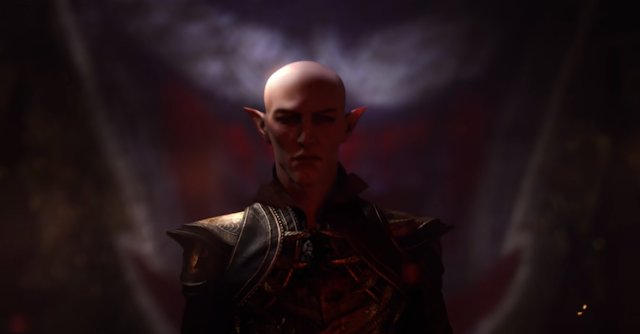
He doesn't call, he doesn't write, but finally, it looks like we might be hearing from Solas at last (2023?), as BioWare announces t...