Showing posts with label Aveline. Show all posts

Saturday, July 1, 2017

Dragon Age 2 (Part 2): Positively Dickensian


Anytime you make Merrill cry, somewhere
a unicorn dies alone.
My favorite thing about DA2 while experiencing the game's storyline was its immediacy and intimacy. When you're playing, the focus is less on where the next battle is, and more often simply on your Hawke's attempts  to survive on a seven-year character journey that's positively Dickensian—arriving as a penniless refugee fleeing the darkspawn attacks in Lothering and rising through the years to become an actual political power in Kirkwall.

That Lothering beginning is an especially clever way to tie Dragon Age II immediately to Dragon Age: Origins, as Lothering was a key location in the plot early on, and it was where we met DAO companions Leliana and Sten. Lothering was later utterly obliterated shortly after our time there—overrun by darkspawn. (I still remember how shocked I was when I could no longer go back to Lothering in DAO... it hit me like a punch to the gut, because the town no longer existed. It had been utterly obliterated. That cute kid you talked to? Likely dead. The sweet villager who helped you find your way? Dead.)

The fact that Hawke's story and DA2 plays out in a single city and its surrounding areas (well, mostly—we do get to run off to the coast or up a nearby mountain) can mean that the action at times feels slightly claustrophobic, but it also becomes home for us, and for our Hawke protagonist, in a way that isn't always possible in gaming, even in RPGs. Somehow, the longer you play, Kirkwall becomes home, and your companions become friends, lovers, and family. Hawke has a home complete with relatives and servants (lovable returning characters Bodahn and Sandal) that it's easy to become attached to. She even has a faithful Mabari war hound just as in DAO (thanks to the free Black Emporium DLC), and as each year passes, her friendships or rivalries become richer or more heated, all the time building up for a final confrontation in which all must choose sides, and in which more than a few hearts may break (or stop beating altogether).

Relationships, rivalries and romances add richness to DA2. Here,
my female Hawke is making a terrible life choice with Anders
.
At times, Hawke can be a cipher—a potentially Randian hero/ine who's also dangerously close to serving as a pretty classic Mary Sue. But for me, at least, she's also more than that. As a small player who only becomes a medium one (at least in my three playthroughs to date), she's real and believable. And she embodies the timeline of most people who become pulled into great events simply by proximity, even against their will. Hawke isn't seeking celebrity. She isn't out for renown. My Hawke, at least, simply stepped in where she had to, where she witnessed injustice or bullying and couldn't let it stand. For this reason, I loved the way, storywise, Hawke was slowly drawn into a moral and political struggle she wanted no part of. It felt both timely and believable, especially in today's turbulent world.

Ultimately, the action in Dragon Age II is more intimate and set on a somewhat smaller scale, but this means that it can frequently also burn hotter and more fiercely. The stakes often feel higher because you're so often simply fighting for Hawke or her loved ones, fighting for them to eat, live, love, and carve a space in the world. Above the fray, meanwhile, and year after year, the stakes grow ever higher, as Templar Knight-Commander Meredith's imbalanced obsession with oppressing the (already imprisoned) Circle Mages and mage apostates continues to mount, even as the mages' elegant and secretive Grand Enchanter Orsino tries to calm her fears... and fails.

Hello, Old Friends...

Familiar faces from DAO abound in DA2—beyond Bodahn and Sandal, we meet our old friend Cullen, the naive Templar survivor from DAO who is now the Kirkwall second-in-command (and, it must be noted, who is palpably hotter than he was in the last game, even if he still looks sleepless and haunted). We also reunite early on with the mysterious hedge witch Flemeth (once again voiced by the incomparable Kate Mulgrew), who looks like she went to a spa after the last game because she looks fabulous, right down to her awesome new hair-horns. Seriously. Look at them. They're fantastic.

Flemeth, is that you?
We also meet our old friend and former DAO companion Alistair (if he survived, that is—although whether he's King, a Grey Warden, or a sodden drunk will depend on the choices you made in DAO), as well as glimpsing the world's sweetest and deadliest bard, Leliana just around the edges. Providing another callback to DAO, the Chantry is once again a major player, and we get a much bigger glimpse of Qunari culture with the presence of a shipwrecked Arishok and his troops (as always, I found myself crushing more than a little on the Arishok, just as I'd done on Sten in DAO and The Iron Bull in DAI, so, um, evidently I have a serious weakness for Qunari men).

Rivalries and Respawns

Does Dragon Age II have flaws? Sure, on a minor level. The Kirkwall setting can get a little confining, and the night quests throughout the city's seedier areas can get really tiresome, simply because you'll have to fight an endlessly respawning series of slavers and thieves. But the story! the characters! I have to forgive that stuff when they give me the chance to know people like Isabela, Fenris, Merrill and Anders. It's all ultimately pretty thrilling and beautifully paced. Inevitably, events and passions come to a head in DA2 in a way that feels inevitable, however tragic they may ultimately end up. The characters are so nuanced and well-written that they act believably according to their natures, and those actions lead to love, kindness and illumination, as well as to devastating loss on all sides. If you don't navigate a very delicate tightrope for darling Merrill, for instance, as gentle and sweet as she is, her loyalty mission can become the game's biggest tragedy, a bloodbath that upset me so much I had to turn the game off.

In addition, the DA2 dialogue wheel is also something of a step down from the huge array of stacked conversation options and directions of DAO, and that means your dialogue responses can certainly be simpler when it comes to some conversations. However, there are still plenty of times when the dialogue is genuinely complex and beautiful nevertheless, and those conversations involve companions and characters who I could argue are actually more mature, complicated and unique than those in DAO (something I also felt was true in DAI). Best of all? If you choose to play her as a bit of a wisecracker, Hawke is frequently hilarious ("I have an excellent sense of dramatic timing. And good hair."). 

Game over, man! Game over!
The complex, funny and heartfelt dialogues and banters are where the characters really shine. For instance, at a key point, Isabela turns to confront Anders, who is pontificating about mage rights (as he tends to do), and rather than responding with her usual wisecracks, she says, "Has it occurred to you that maybe there's no justice in the world? Other than that voice you keep in your head?" This actually silences him, and it's a genuinely poignant moment.

Their conversation continues in a later banter between the two:

Anders: There is justice in the world.
Isabela: Is there? You want to free the mages. Let's say you do, but to get there, you kill a bunch of innocent people. What about them? Don't they then deserve justice?
Anders: Yes.
Isabela: And then what? Where does it end? It's like a bar brawl. People are continuously pulled into the fray, and nobody remembers why it started. Justice is an idea. It makes sense in a world of ideas, but not in our world.

Like the best tales, Dragon Age II is well worth savoring, and it culminates in a shocking and genuinely jaw-dropping dramatic moment that had me thinking for days. Whether or not what happened was justice? It's a question that will continue to be debated online for years to come.

Seven Years in Kirkwall: Dragon Age 2

Flemeth: "It is only when you fall that you learn whether you can fly."

First off, I have to admit something. And it's embarrassing, given the topic of this blog.

So here goes: I skipped Dragon Age II. Yep. Just zoomed right on by it in my first playthrough from Origins to Inquisition.

"Hello, Mr. Templar. This thing? Oh, it's not a staff.
Just a stick. My... backscratcher. Take care! Byeee!"
I had a lot of good reasons at the time—ahem, or so I told myself—the game had gotten mixed reviews, and the first hour or so of halfhearted gameplay didn't draw me in. But the real reason I skipped it was simply that I couldn't wait any longer to play Dragon Age: Inquisition. So I skipped it. And didn't look back for a year, in which I basically just played DAI over and over again (intermittently punctuated by Mass Effect trilogy replays or other gaming forays into LOTRO, Half-Life, Jade Empire, and more).

So I did that. And yeah, I was stupid. Really, really stupid. Because Dragon Age II is flat-out wonderful. In fact, when I did finally play it (in my first actual full-trilogy playthrough three months back), I loved it so much I played it three times in a row (putting my plans to jump right back into Dragon Age: Inquisition on hold).

From Poverty to Power

As before in Dragon Age: Origins, Dragon Age II gives you a lot of flexibility in building your protagonist, Hawke. Hawke can be male or female (mine was, as almost always with me, female, but it's also easy to imagine the player headcanoning Hawke to satisfy additional gender preferences or nonpreferences, as desired), they can fall anywhere on the Kinsey scale you'd like them to, and they can be any one of the standard Dragon Age classes, from Mage, to Rogue, to Warrior, et cetera.

If Dragon Age: Origins is about making you really feel the monumental risks and sacrifices of the Grey Wardens, the few able to take action on Ferelden's Worst Day Ever (as the Archdemon returns, bringing the potentially world-ending Blight and hordes of darkspawn), Dragon Age II puts you front and center in the growing conflict between the Mages and the Templars who watch them. Suddenly, you're not evaluating the world state, godlike, drawing battle lines or strategies—you're right amidst the poor and terrified, and simply trying to make things right, moment to moment. 

So, especially if you play a mage, suddenly the conflict is right in front of you. And it's personal in a way that it's never been before.

Dragon Age: Origins was a fairly traditional work of fantasy. It was very much a spiritual child of Tolkien and his world—a sprawling achievement that took you all over Thedas, from Denerim to Redcliffe, from the Dalish elves in the Brecilian forest to the dwarf-kingdoms of Orzammar, or on to the Deep Roads beneath them all. Dragon Age II, on the other hand, presents an odd yet arresting combination platter. It's a classic fantasy hero's journey in the Campbellian sense, but it's also wrapped up in the story presentation as a kind of classic Noir whodunit. Framing Hawke's adventures is a series of scenes in which Seeker Cassandra Pentaghast (a specialized warrior working for the Chantry) fiercely questions Kirkwall dwarf, author and rogue, Varric Tethras, about a recent mysterious catastrophe that was the result of the circumstances we're playing/watching before us. As Varric narrates each chapter with an appropriate amount of humor, suspense, occasional color and added drama, we're swept back into the events themselves—it's classic Noir in the best sense, and it adds urgency to the playthrough as well, as we wonder, "What happened? What was so bad that this warrior's questioning this guy like the entire world hangs in the balance?"

Well, let's just say we definitely find out. We get ringside seats.

The (Literal) Highs and Lows (and Bigger Lows) of Kirkwall Life

Cullen's back! And cuter! But he still looks like
he needs years of sleep after his DAO ordeals...
The story of Dragon Age II takes place almost entirely in the Free Marches city-state of Kirkwall, a city with a complex history that has changed hands numerous times. Although Kirkwall is now part of the Free Marches and not far from Ferelden, its past as a longtime Tevinter port once known as "the City of Chains" is unmissable and genuinely creepy. The city's past haunts it heavily and it's all strikingly true to the spirit of Tevinter, which is a merciless, decadent Roman-inspired empire ruled by Magisters (mages often using blood magic, and often in ominous and corrupt ways). In Tevinter, power is everything and slavery is an everyday fact, and Kirkwall is shadowed by enormous statues of suffering, enslaved and tortured humans that are everywhere you look, from the harbor to the city itself. These statues of oppression are one of the brilliant ways Dragon Age II keeps you focused on a story that's ultimately about oppression and systematic dehumanization, and how those factors can twist even the best of people overcome with rage and helplessness.

The action of Dragon Age II ranges from the poor and dangerous backstreets of Lowtown, Darktown, the Docks, and the Alienage (where the elves live in semi-forced segregation), to the Gallows (Templar headquarters), to the more posh Hightown area or the political headquarters at Viscount's Keep. By the end, you'll feel like you know Kirkwall as if you were a resident yourself. 

Dragon Age II offers a story that invites you in and asks you make yourself at home in Kirkwall. While, as always with Dragon Age games, you can certainly play as a pretty evil, reprehensible character, the advancing storyline does its job in inviting your empathy and understanding of the characters, almost all of whom enter the story as outsiders. (Besides, I admit it, I don't play these games to be a villain. I want to be the hero!)

A Rogues' Gallery of Heroes, Outsiders and Misfits

Escaped slave Fenris is just one of the complex,
fascinating companions who joins you in DA2. 
DA2's cast is as rich and diverse as you'd come to expect from Bioware. First off, there's Hawke, who's exhausted, grieving (she loses a sibling on the initial journey from Lothering), and desperately trying to hold together what family remains to her. She's immediately faced with indentured servitude for a year's labor in order to simply allow her family to enter the city at all, and one of your earliest decisions will be whether Hawke becomes a part of Kirkwall's underground, or if she tries to move forward in a more lawful way.

Her journey as a character will ultimately span seven years (seven years!), and you'll share those years with a colorful cast of characters who are just as flawed, brave, brash and scared as Hawke is, from steadfast female warrior Aveline, to funny, companionable Varric. You'll also ally with passionate mage-rights apostate Anders, who returns from his hilarious turn in the Dragon Age: Origins DLC Awakening, and who's now hiding the fact that the spirit of Justice—previously a separate character in Awakening—has merged with him and is now actually sharing his body. You also meet the proud escaped Tevinter slave Fenris (an elf whose entire body was permanently etched with the magical element lyrium by his former master), stranded female rogue and pirate captain Isabela, and the gentle elf Merrill, who has been quietly banished from her Dalish clan because of her insistence upon pursuing her research into ancient elves and the centuries-old mirror that obsesses her. 

As played by Eve Myles, Merrill's voice is so adorable it's
like listening to kittens, rainbows, and frolicking otters.
Each of the Companion characters in DA2 is vibrantly written and performed, and most, with the exception of Aveline and Varric (all that chest hair goes to waste—such a crime!), are romanceable by your Hawke whether male or female. The game's easy and streamlined approach to sexuality is refreshing even today, and it also offers a lot of replay value, as the game's romances mean that you'll get a much different story if you pursue a relationship with a different character next time. In my three playthroughs, for instance, my female Hawke romanced Anders, Isabela, and Fenris, and I was genuinely delighted with all of them. (On a side note, Eve Myles (most known for her work on "Torchwood") gave Merrill a voice that was so charming, sweet and irresistible in its slight Welshness that every time Merrill spoke, I felt like I was hearing the aural equivalent of hugs, chocolates, puppies, rainbows, otters, and kitten videos.)

Isabela's a tough talker, but her romance is
surprisingly wistful, thoughtful and sweet. 
The romance that surprised me most was probably Isabela's—she turned out to be a much richer character than I'd expected, and her romance is sweet, sexy and funny (the seduction scene, with Isabela stripping off several dozen weapons while making out without missing a beat, is honestly even better if played out with a female Hawke—empowerment all over the place). I also loved Anders's romance, which is simply the stuff of high drama in a way that's also directly tied to the central "mages versus templars" conflict at the heart of Dragon Age II. By the end, Anders broke my heart in a way that felt familiar, because I'd already experienced it later on in Dragon Age; Inquisition with Solas. And it still hurt more than I'd expected. (There may have been tears. Don't judge me.)

As is usual with Bioware games, the romances are essential, illuminating, and surprising. They provide glimpses into the secret hearts of your companions that you wouldn't get otherwise, and are often directly tied into the main storyline and its arc in genuinely creative ways. The addition of the option to "rival" your companions in the game (something wholly unique to DA2) also adds complexity, as it means you don't have to constantly agree with your companions in order to romance them. The "rival" concept isn't so much about antagonism as it is about intrinsic beliefs—for instance, you may find your mage Hawke "rivalmancing" magic-hating former slave Fenris simply because you are steadfast in your beliefs that magic is acceptable. Even if he can't agree with you, the sparks may fly, and if you're attracted to each other, this means a relationship is still possible, it'll just be more tempestuous than is usual in gaming.

But that—once again, just adds to the game's replay value. Your conversations and romances will proceed incredibly differently depending on whether you and your object are friends or rivals. "Rivalmances" in fact often yield secrets you won't get if you only pursue the safer, more traditional friendship routes in getting to know them.

Please do check out my next post for the conclusion of my thoughts on DA2. Thanks!

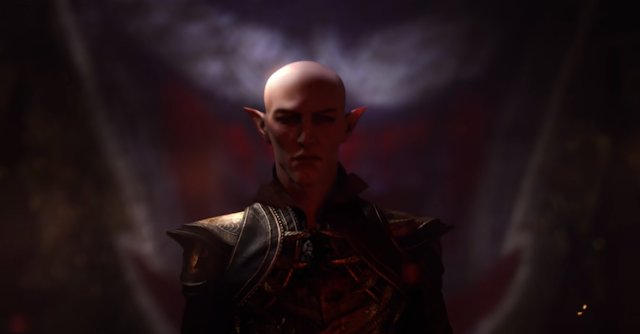
"Dragon Age: Dreadwolf" Predictions & Ponderings (and "What's in a Name?" Redux)

He doesn't call, he doesn't write, but finally, it looks like we might be hearing from Solas at last (2023?), as BioWare announces t...