Showing posts with label Angela D. Mitchell. Show all posts

Friday, September 25, 2020

Fund My Kickstarter to Make "DREAMS, DRAGONS, AND DREAD WOLVES" Criticism Book a Reality!


CASSANDRA: The Inquisition! You're not planning to write a book about us, are you?

Hello, fellow Thedosians!

After over three years of writing this blog of criticism and exploration of Dragon Age, I'm excited and humbled to announce that I'm Kickstarting a full-length nonfiction criticism book on Dragon Age, called Dreams, Dragons, and Dread Wolves. I'm so excited I'm a mess. I'm speaking Qunlat and elven to strangers. I give weird looks to mirrors. You get the idea.

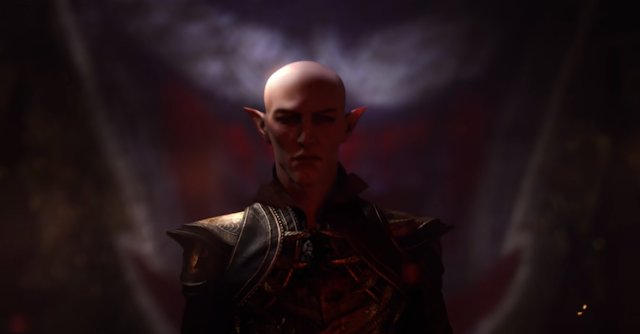
But it's happening at last. Dreams, Dragons, and Dread Wolves will offer an array of in-depth analyses, critiques and explorations of Dragon Age: Inquisition, its companions and advisors, and its villain/antihero Solas. The book will also include my predictions and theories for Dragon Age 4 after the revelations of the DAI DLCs ("The Descent," "Jaws of Hakkon," and "Trespasser"), as well as those of Tevinter Nights and the tempting teasers released by the BioWare team. And all in a collectible hardcover book.

My hope is that this is a must for fans of Dragon Age, and if the project is funded, would be completely unique as the world's only independent and comprehensive literary and critical analysis on Thedas in print.

The Project in a Nutshell

After falling in love with Dragon Age, what I've always really wanted was to create a book of criticism that wasn't like anything else out there on gaming or RPGs, that offered critiques of this gorgeous series that treated the writing and worldbuilding with respect—and that analyzed them on a formal, even literary level. Or at least, that was my goal. I haven't always succeeded—I still feel like I should have written more, covered more characters. But I have made headway in the past 3-4 years, with more than 110 blog posts and ridiculous walls of text. And it's been a blast.

I love the world of Thedas, so this book is something I've dreamed of creating. Coming this close to realizing that goal, I can't tell you what it means to me. Now let's take a look at the project in a nutshell:

  • GOALS: $12,500 to fund an eBook and limited collectible print run of a special hardcover edition that offers a complete, in-depth and entertaining critical analysis of the world, characters, romances, and quests in DRAGON AGE INQUISITION.
  • STRETCH GOALS: $20,000 will expand the book by adding a FULL section of chapters on DRAGON AGE ORIGINS characters, romances and story. $27,500 in stretch funding will add another FULL section of chapters on DRAGON AGE II characters, romances, and story. $35,000 will add a section of detailed analyses and discussions of ALL Game DLCs. $40,000 will add a section of analyses on ALL DRAGON AGE NOVELS, MOVIES AND COMICS. There's plenty more content I can add from there (including timelines, quest analyses per game that include ALL quests, etc.), so let's see how it goes!
  • EBOOK: All formats
  • HARDCOVER PRINT RUN (EMBOSSED COLLECTIBLE): 250/500/1000/2000/more copies (possible via stretch goals, depending on demand).
  • PAGES: Approximately 450 (although this will be more if stretch goals are met)
  • DELIVERY DATE: APRIL 2021
  • KICKSTARTER FUNDING TARGET: $12,500 or above for hardcover print run at cost; $25,000 or higher to cover writing, editing and additional fees, as well as higher print runs (and print extras such as higher page counts, flocked pages, and more.
  • REWARDS AND GOODIES: I will be editing these as the project moves along, and hope to be able to add more rewards and goodies to come. 
  • KICKSTARTER LINK: Find and fund my project at https://www.kickstarter.com/projects/dreadwolf/dreams-dragons-and-dread-wolves/.

    And thanks for whatever you can contribute! And no pressure -- if you can't support me right now, I hope you'll share where you can with other Dragon Age and gaming friends. 

The Details

The book is written by me, and is a heavily expanded version of my posts and analyses right here on "Dumped, Drunk and Dalish." But the book isn't just going to be some kind of rehash of previous blog posts—instead, what I'm doing here is to take every single Inquisition-focused blog post I made about the larger history of the game, its companions, heroes, villains, advisors, and NPCs, as well as peoples including spirits, demons, the Evanuris, Tevinter, the Qunari, the Chantry, and beyond—and I'll be expanding, updating, and re-ordering those elements into chapters and themes that move us through the backstory of Dragon Age Inquisition chronologically, as well as by emotion and approach. 

Story, Companion, Romance, and Loyalty Quest Analyses

The book will include character analyses from those you've seen here, on The Iron Bull, to Solas, Cullen, Cole, and many more, to those not yet posted to my blog, on key figures from Leliana, Josephine, Dorian, Blackwall, Varric, and Vivienne, to Krem, Celene, Briala,  and dozens of other major characters across Dragon Age Inquisition.


I'll also be including an analysis of the main story plot from beginning to end (and major Inquisitor quests), Companion analyses (including all loyalty quests), and detailed analysis and discussion of all game romances—from Solas, Cullen, Sera, Josie, Cassandra, Blackwall, Dorian, and The Iron Bull, to Adoribull, to the quiet flirtations of Blackwall and Josephine, of Maryden and her three different potential suitors (Krem, Cole, and Zither) and of Scout Harding to a smitten Inquisitor. I also take a look at unromanceable characters and their relationships, like Varric's complex relationship with Bianca, or Vivienne's secret tenderness for Bastien.

From old to new, all of these chapters will move fluidly one after the other, section by section, and each chapter will bring a new exploration and perspective. I'll also be including discussion of Companions with high Disapproval of our Inquisitors, and how those Disapprovals can change the game.

Right now in semfinal draft form, it's about 115 chapters organized across seven sections. 

Promo Decisions

As far as where this work fits into the fandom world of Dragon Age, I want to be blunt and transparent, and to note how supportive BioWare and so many team members have been when it comes to my blog, and how grateful I am to them all. So many writers, devs, and artists (and more) have always been kind, accessible, and interactive, and I can't thank them enough.

For this reason and so many more, from a big-picture standpoint, I've done everything I can here to plan and create something that's legal nonfiction criticism and discussion, and wholly unique (I hope). AND... separate.

That's why I'm attempting to fund my book without asking for my acquaintances and friends at BioWare to share it, because I don't want to put them in any position to feel conflicted, and because I worry that even if they did support my project, such shares or likes might constitute some kind of endorsement, or put them in a position of having to feel used by me as some kind of conduit. They're good and generous people who work way too hard, and I don't want to make their lives more difficult in any way.

Ultimately, while this book is a real culmination for me, just know that it won't end my blog or my love for this universe. Dreams, Dragons, and Dread Wolves simply gives me a different way to criticize, discuss, and celebrate the world BioWare has given us.

Thanks for Supporting!

I know these are tough times for everyone. We're all battling our own Breach in the sky right now, so just know that I'd be truly privileged simply to fund the eBook and smallest print run. However, it would be amazing to achieve stretch goals, so that I can get the project to the point where I can guarantee a larger print run, to offer content on ALL games, and earn some income to cover the years this project has taken me to prepare. But fingers crossed!

Please note that the book is currently primarily focused on the main game world and Inquisition, but I will add commensurate (huge) sections and chapters on Origins, Dragon Age II, the DLCs, novels, movies and more, as stretch goals are achieved.

More on this in the next few weeks—and thanks! Please stay safe out there, okay?

Friday, April 17, 2020

Fade, Take Me Away! (Ma Serannas for the Hiatus)


Hello, all you beautiful kadans!

Just a quick wave to send out my apologies, albeit into an unexpectedly crazy world, after my unforgivably long blog hiatus. It's the first one I've ever taken of anywhere near this length, and I hugely apologize.

Basically, I've been battling some hurdles and life suckage. I'm totally rallying, but it's a work in progress. So I appreciate your patience—and wanted to at least give an accounting of sorts.

Also, apologies in advance, but there are cats ahead. Lots of cats. I mean, like, pet stuff. Love and loss. Proceed at your peril.

Highs and Lows

On the non-sucky side, thanks to some truly generous support from BioWare talents and fans, Dragon Age Day 2019 was incredible, and our best celebration ever of BioWare and the Dragon Age world we love so much. It even let me interview by e-mail and phone/videochat some of my favorite people on the planet, people I respect so much not just for their creativity and genius, but for their palpable kindness: warrior and advocate Steve Spohn of Able Gamers, the always witty and brilliant John Epler (Narrative Director for the Dragon Age series), the equally witty, talented and charming writers Mary Kirby and Brianne Battye (another dream Internet conversation for me), and of course, superhero editor/writer couple Karin and Patrick Weekes

I mean, seriously, people, those interviews were so glorious and lovely they probably cured my flu for the next decade (hopefully they transfer a few powers against coronavirus, aghghgh). Regardless, those conversations will stay with me forever, and will continue to inspire me as an artist. I'm so blessed.

After the Celebration...

But the event and its interviews and transcriptions was also pretty taxing, and I was still recovering from two bouts of the flu in six weeks. So while I was thrilled beyond belief to once again be a part of helping to stage this year's successful event, I also kind of collapsed and spent 2-4 weeks with very few coherent thoughts afterward (I think "Fire bad, tree pretty" pretty much sums it up).

On the plus side, already, I can't wait for next year. The Dragon Age Day team—led by the immortal Imasithduh and so many other equally talented, brilliant and hardworking members—as well as its players, supporters, and fans, are the best people anywhere.

But it capped off a pretty unrelenting Fall, so basically, I just kind of collapsed through the holidays. And you know how it is. Somehow December becomes January. And January lasts a decade and yet somehow also seems to transition instantly into February. And then I'm still not sure where March came from. It just happened, and meanwhile I was still mentally somewhere back in the first week of January...? 

And now somehow suddenly we're all fighting a virus and also halfway waiting to turn into zombies. The world is nuts.

Tough Goodbyes

(DAMMIT)
It didn't help that I was also still processing the unexpected loss of a beloved pet, my cat Frodo (look at that face) not long before, and I'd kind of put off dealing with it at the time, so it hit me extra hard over the holidays. If you've ever lost a beloved pet, you know what it's like, and while I've been a pet owner for my entire adult life, and loved and grieved every single furkid that I've ever had to lose (RIP Samwise, Pippin, Sagan, Hermione)—always far too soon—losing Frodo honestly knocked the wind out of me. 

I'd had Frodo since his first day on earth (I rescued him and sweet littermate Batty (and two adorable others my family adopted, complete with bottle-feeding), and he was scruffy but cute in a brindled-stray kind of way. His sibling Batty, for instance, was a silver slip of a kitty, elegant and sleek, with a long-nosed face and almond eyes that still transfix anyone she meets (as they should! She's gorgeous and utterly precious). But Fro really wasn't visually distinctive. He was goofy and plump. He had a big pink nose with a long white bridge. And one funny, long white sock on his right paw. That was it. He was a basic tomcat. 

Until you got to know him. When he became this weird, wonderful, individual, goofy, ridiculously affectionate cat—a real individual, and an incredibly hilarious, vocal and loving feline who spent his life lying on my lap, shoulder, keyboard, or bed (with inseparable Batty), as close to me as possible, 20 out of every 24 hours, for 13 years (when he wasn't chewing laptop cords, knocking over water glasses, or chewing on toilet paper rolls as his go-to's for amusement). I used to joke to friends that with Frodo's demand for closeness, the only thing that would make him truly happy was for me to swallow him whole, at which point, he'd go, "FINALLY!" He was just always connected to me by that invisible umbilical. And vice versa. There's nothing like rescuing an animal as a baby to increase your vulnerability to them, and even then, Frodo was unique.

For instance, even his mild seizure disorder just seemed like part of his quirk and difference, and he handled it lifelong with a curious patience and dignity. After his diagnosis, I kept a big, dog-sized, hard-shelled kennel to shelter Frodo for those rare moments involving a larger seizure, and he never fought against being locked away, but was instead so inured to his 'special area' (one I kept cozy and inviting, with warm blankets sprinkled with catnip) that he would often go into the kennel the moment he felt a seizure approaching. It was peculiarly sweet, and humbling, to watch.


Frodo Doodle courtesy of my talented friend Sheha
of  
AdoribullAddicts
Then Frodo was unexpectedly diagnosed with an inoperable bladder tumor in late October, so it was one of those rare situations where all is fine with your beloved pet, then suddenly five days later, you're $5k further in debt and (worse) having to schedule to have your furry friend euthanized. Which I did at home, and which, in hindsight, I felt was harder on me as his owner in some ways (it takes a lot longer than it does at the vet), but which was also incredibly comforting and stress-free for my sweet little guy, so it was the right thing to do. 

Thanks to a caring vet house call, and to my sister Laura's constant support at every step (she called the vet every 8 hours while Frodo was there), I was able to do the right thing. The vet even fell for my ridiculous sweet Fro, looking at me with an openly stricken face as Frodo, mildly buzzed and pain-free on meds, rolled over under her fingers for more snuggles and belly-rubs on introduction; her face was an open depiction of Oh shit, I have to put him to sleep. But she was a terrific help, and my poor Frodo died in my arms, purring to the end—and the very last thing he did was to raise his head to rub his cheek against mine. And then he just kept on sleeping.

I still hate Wednesday mornings, ever since. Wednesday mornings are still, to me, that time when I had to bring someone in to send Frodo away.


Frodo (left) and his sweet tiny Batty (littermate and
protector, right). My two buddies, now one shy...
Anyway. I wasn't okay for awhile after that, and worst of all, a lot of the world just doesn't understand how much those losses can hurt, so it's something a lot of pet owners have to go through alone (I am lucky to have friends and family who do understand, but it still hasn't been easy). 

My reaction really humbled me... it reminded me again of how much we take for granted, and I was reminded yet again of the revelation I'd had after nursing my stepdad and Mom through terminal illnesss... of how lucky we are every single day simply when nothing goes wrong. When everyone we love is safe, and present. It's a gift, and it's finite. Something will always go wrong. That's life. Our job is to enjoy everyone and everything while we can.


Portrait of Frodo and Batty (Frodo top,
Batty below) Thanks Mithmeoi!
But I'm lucky, still, in many ways... lucky to have my little silver Batty, Fro's equally adored littermate with me, who also had to grieve her loss and confusion in her own way. Hearing my little surviving cat walk around making eerie little sorrowful awooo howls, or talking to her reflection in the mirror (in brand-new behavior, as if searching for her brother), was brutal, so I took care of her and she gave me a ton of cuddles, and we got through that incredibly sucky period together. 

It's life. We assimilate and move on. There will always be a breach, a rift, a demon... a death. We manage it, right? That's the world. But we are so, so lucky for everything in between.

A Moment for Thanks...

Anyway. I just wanted to let you know that this blog means a lot to me, and so do all of you who read it and share your reactions with me. The Dragon Age community has made me feel so accepted and welcomed, while also celebrating with me when I was up, and cheering me when I was down. You are all magic.

I do have several additional posts in progress that I can't wait to share with you (including the fabulous third and fourth parts of my transcribed interview with the wonderful Weekeses, criminally past-due!). I'm also planning on a progression to my Solas romance analysis series, as well as some individual posts examining stories in the exciting new Tevinter Nights short story compilation just out this past month!

So—I just wanted to send out a brief apology, with my heartfelt thanks for your patience, and I'll look forward to your reactions to my upcoming posts, which I hope will help to make up for the silence.

Meanwhile, the world seems to just get crazier every day. In spite of that, please know you're not alone. Stay safe out there, rest up, stay healthy, and take care of yourselves.

Ma serannas, and ar lath ma... (but not in a creepy way)...


Angela

Saturday, September 16, 2017

Actor, Lover, Soldier, Spy: The Iron Bull at Skyhold

Cole: You can use sadness?
Iron Bull: Ben-Hassrath, Kid. We can use anything.

"You don't need blood magic or demons to change
someone's mind," observes Bull. "We're a lot more
fragile than we'd like to believe."
Note: This is part two of a series of analyses on the DAI character of The Iron Bull. Meanwhile, for my initial introduction to and overview of his character, please check out part one here. As always, beware of spoilers!

You've survived Haven. You've reached that lonely and miraculous castle that holds up the sky. What do you need next, as you move forward at the Inquisition? Chances are, to roughly quote the famous lines spoken by Morgan Freeman in The Shawshank Redemption, The Iron Bull can get it for you. Or give it to you.

Long story short? Bull's here to help. It's in your best interests, after all... and his.

If you've reached Skyhold, this is the point where the Iron Bull ramps up his potential usefulness and begins to engage with you for the first time. He's immediately a terrific asset—you're able to deploy his lovable mercenaries, the Chargers, on a variety of useful and subtly beneficial missions, while Bull continues to show his usefulness as a warrior, companion and captain.

However, if you pay attention, you'll note that, like any good spy, while Bull manages to seem transparent and open, he actually gives away very little personal insight—just a few bits and pieces of information (often misleading) that only slightly help us to understand him. He's brisk and professional, a cipher in the beginning—genial, helpful, and formidable in a fight, but he doesn't say much that actually tells us who he is in any specific individual sense.

Painting the Big Picture

Back at Haven (or early at Skyhold, depending on your choices), the first insights into Bull that he does provide to us about himself are mostly big-picture vantage points, and fairly deliberately so: He explains the concept of the Qun, and gives an idea of life under Qunari rule. He's frank if fairly general about everything from parenting and childhood under the Qun, to sex, which in Qunari culture is casual and clinical, useful for breeding, but which is otherwise treated routinely and therapeutically via tamassran sex workers as if remedying a stray symptom for release on an as-needed basis ("We don't have sex for love," Bull chuckles).

Although Bull does also touch upon his own previous wartime activities in embattled locations like Seheron, it's visibly a sensitive subject for him. However, as our conversations continue, he does indeed tell us about that experience in further detail, and even about his breakdown and ensuing voluntary re-education after he was traumatized there: "One day I woke up and couldn't think of a damned reason to keep doing my job," he admits. "Turned myself in to the re-educators. I wanted them to fix me like they'd fixed [others]."


Early on, Bull's really good at giving the impression of candor
while not actually revealing all that much about himself
.
My favorite thing about this interlude in our conversations with Bull is that so much of what he describes is, pretty frankly, alien and appalling: Children raised without families. People named for and used as literal tools. Sex as detached, clinical physical therapy and release. Trauma as a reason for brainwashing. Individuality as an opportunity for torture.

And you can tell he expects this reaction, acknowledges it, and is amused by it, noting that this is all routine in his society, and that it's not so hard to break or mold a mind. He doesn't see this as an immoral thing, just a necessary one—an altered mind, he reminds the Inquisitor, is preferable to execution (and keep in mind, he's speaking as someone who happily handed his own mind over for manipulation at a key moment). 


"Keep a man awake long enough, ask the right questions, give the right potions, and you can get him to say anything," Bull notes dryly, although not without humor. "You don't need blood magic or demons to change someone's mind. We're a lot more fragile than we'd like to believe."

A Shakespearean Touch

As we accumulate approval points from Bull—mostly for simply helping the poor and common folk we encounter, by battling Venatori or by succeeding at a variety of measurable, useful soldiering skills such as horse racing, Bull begins to thaw and show real affection. One of the first ways in which he demonstrates liking and friendship for us after the arrival at Skyhold is to take us out among our own soldiers, in a direct homage to a key scene from Shakespeare's Henry V, to meet and talk with a few of our own ordinary people incognito, and to listen to their hopes and fears.

"From camp to camp through the foul womb of night, the hum
of either army stilly sounds." Bull's first personal interlude
with us, as a tour of the common Inquisition soldier's plight, is
downright Shakespearean.
It's a great scene thanks to Dragon Age: Inquisition's writers and artists—cozy and comical, yet moving. Bull's deliberately attempting to inspire the Inquisitor and to provide a welcome reminder that these very soldiers will put their lives on the line for you tomorrow.

Yet there's more to it. The dialogue also can be taken as evidence that Bull's using this situation as a primary opportunity to evaluate your reactions and susceptibility. Do you do as he suggests, and stay silent when listening to the soldiers? Do you speak up and ask them questions? Are you inspired when the encounter is done, or are you worried or depressed? If you're someone who immerses themselves into the game and its story interactions, everything about how you react tells Bull a little more about who you are and how he might be able to utilize the Inquisitor to the benefit of the Qunari. And of course, he's also using the moment to move in closer, to say, "Look at how much I care about your mission, down to the smallest pawn on the chessboard. I can be trusted; I should be trusted."

The thing is, and where it gets truly complicated, is that I think Bull's absolutely telling the truth in almost every conversation we have here. Just... you know, not the whole truth (a talent Bull shares, among many, in abundance with Solas—and it's not a coincidence).


Power Plays

This first approval interlude is where Bull's relationship with a high-approval Inquisitor changes, because it leads to additional approvals and milestones, and to relationships that operate on multiple levels.

I will be addressing Bull's entire romance in a separate post (because it deserves a greater analysis on its own, and is truly fascinating), but, meanwhile, to simplify: My personal belief is that Bull is forging links in a chain... links that will lead to a trusting Inquisitor... or (better yet) to an Inquisitor who actively seeks to pursue a romantic relationship with him. 


And that's the jackpot. Just imagine all those secrets, suddenly right out in the open and available. If Bull's seeking to regain credibility with Par Vollen? This is it. Right here. A romance with the Inquisitor could provide Bull with the leverage for a life-changing amount of security and power back with the Qunari.

It's an uncomfortable revelation if you're invested in Bull's romance. But it's also a really pivotal and interesting moment in the game, honestly. Because Bull's sexual relationship with the Inquisitor is the reverse formula of almost all of the usual relationship formulas I've seen in games or pop culture. It's paradoxical just like Bull—hot, yet cold. Intimate yet reserved. 

But more on that later. Let's just say... he very deliberately puts himself in a situation in which he not only holds all the power, he uses that as something to both entice and tantalize the Inquisitor.

With Bull, it's all about control. Ironically, still, he'll make sure you get what you need. Because that's how he's built, as a person.

The Caregiver Who Lies

For both good or ill, Bull's defining impulse is to give those
around him what he thinks they need. It's an aspect of his
character that exemplifies Bull at his absolute best... and worst.
From his central relationship with the Inquisitor to his interactions with his daily companions, Bull's dialogues and banters are intriguing because of their deceptive transparency. In the end, every single one of his interactions can be boiled down to an attempt by Bull to give people what he perceives them to require. Partly because it's what he's been driven since childhood to do—and partly because it's the best way to potentially manipulate them now or in the future.

This approach—this attention to what people need, is Bull's defining characteristic and here it's of course both lovable and deeply unsettling, because the Qun has, to some extent, warped Bull's positive core instincts as a caregiver into something negative; into something that he can use to manipulate and control others. 


Bull is a superb spy, a great warrior, and a smart strategist. However, I would argue that his most profound gift is that of a great actor—one who always seems to be flawlessly in-character, always apparently the same persona, yet who can play infinite variations on that character without blinking, and who can improvise at a moment's notice.

The unfolding story and banters with the Inquisitor and companions all reveal Bull as a person who effortlessly and delicately adjusts his personality for each social situation. With Varric and Sera, he's funny and companionable; with Vivienne, he's subservient, urbane and respectful; with Cole, he overcomes his initial fears of demons and spirits to quickly become affectionate and downright paternal. With Blackwall, he's professional and friendly, a fellow soldier, an approach he also takes with Seeker and female warrior Cassandra (along with a little respectful flirting).


The Trickster and the Vint

The only two companions who seem to be genuinely difficult for Bull to bond with at first are the handsome Tevinter mage Dorian, and, predictably, the secretive elven apostate Solas. Bull clashes with Dorian because there's genuine sexual tension there, and also because Bull, with his utter lack of sexual hangups or repressions, represents everything Dorian, a sensitive outcast of Tevinter nobility, hates and fears about himself as a man who loves other men.

Meanwhile, Bull clashes most of all with Solas, the (secret) rebel trickster and ancient, because the rigid militaristic strictures of life under the Qun represent everything Solas hates as a passionate believer in free will (he would, after all, happily burn down the world in order to free those trapped within it). It is interesting to note, meanwhile, that like almost everyone else, Solas underestimates Bull at first, as shown in one of my favorite early banters between the two characters:

Solas: Hmm.
Iron Bull: Something wrong?
Solas: A man in the last village. Something in his manner troubles me.
Iron Bull: The baker with the squint and the red nose? Yeah, spy. Probably Venatori.
Solas: Why do you say that?
Iron Bull: He watched all of us. A normal guy would focus on you, because staff, or me, because hornsHe had a dagger up his sleeve, which no baker needs, and the knot on his apron was tied Tevinter style. I sent a message to Red. She'll investigate.
Solas: You are more observant than you appear.
Iron Bull: The good spies usually are.

However, early direct attempts by Bull to befriend Solas don't go so well. As someone who fears demons and the Fade, Bull's attempts to bond with Solas over how goshdarned fun the Fade can be constitute some of his few visibly forced or false moments:

Iron Bull: Hey, Solas, you ever do your Fade thing and pretend you can fly? Just flap your arms and zip around in there? Then maybe bang some hot Fade ladies?
Solas: No. Such behavior attracts the attention of demons.
Iron Bull: Aww. Demons shit up everything.

However, Bull and Dorian eventually reach a friendly detente (and if neither is romanced by the Inquisitor, they eventually may become lovers), while, if the Inquisitor chooses Bull's side and saves the Chargers in "The Demands of the Qun" (Bull's crucial central loyalty quest), Solas at last thaws and becomes genuinely friendly and caring with Bull. Solas's attempts to comfort and distract a terrified Bull after he goes rogue (Tal-Vashoth) against the Qun constitute some of the best conversations in the entire story, complete with a fantastic and detailed game of mind-chess between the two. (Meanwhile, if we don't make the right decisions in Bull's loyalty quest, then Bull's story takes a decidedly colder, darker turn that ends tragically, years later, in the DAI DLC "Trespasser"—but more on that outcome in another separate later post. Also, please forgive me while I go ugly-cry for a few minutes...)

All right. I'm back.

High Stakes

Ultimately, Bull's conversations and relationships are all by turns thought-provoking, complex, brutal, moving, and (usually) delightful. They are unfailingly the product of keen observation and a careful attention to identifying and then giving people what they need (and yep, this directly applies to his decidedly edgy and complex romance, as well). It's both the most endearing thing about him... and the most unnerving, depending on your choices as the game story progresses. 

Because, see, at this moment... right up until "The Demands of the Qun," Bull is two people. He is adeptly playing two storylines at once, and dancing as fast as he can the entire time. 

The irony is that our Qunari liar, the famed Hissrad, is just as adept at lying to himself as he is at lying to others.

Bull is a man waging a war inside. Sure, it's pretty apparent that he's at least on some levels working to re-ingratiate himself with his Qunari superiors in Par Vollen... or at least to give himself those options. As Gatt notes later on, Bull's very much aware that he's running out of time if he wants to remain an accepted or valued part of the Qun.

Flipping the Equation

Yet I also believe that Bull is at Skyhold in a last-ditch attempt at rescue—the rescue of himself, of the little boy who once protected his fellow classmates from harm. Of the man who singlehandedly avenged his entire unit, then broke inside because he was more than a mindless implement of violence. 

I think the Bull at Skyhold is therefore subtly and even desperately trying to create a place where he can find solace, companionship, a foothold, and real safety. Where he is valued not just for what he can do, but for who he is. Where he can preserve the family he has built for himself. Where he has a name. Where he can experience love that goes beyond superficial pleasures and extends to true intimacy. Where he can stop playing a part, reading the room, being the spy in the center of it all. Perhaps, where most of all, he can simply relax.

And where he can, ultimately, be himself. The part of his own equation that the Qun considers irrelevant. After all, the Qun does not value the individual. How tragic is it then, that Bull himself is such a magnificent individual in his own right, one constantly stamped out by the heel of his own government? Everything, everything, that makes Bull special is pretty much disregarded by his own culture. If Par Vollen had its way, they would cut out the loving, funny, selfless, generous guy Bull truly is... and gut that person for scraps, leaving only a cold and easily replaceable fighting machine without a soul. 

Ultimately, what moves me about Bull is that I think this is really why he's here, why he joined the Inquisition. Not to recover his career under the Qun, but to recover the sense of hope, joy and love that was broken long ago in Seheron. I think he knows deep down that he's broken. He knows he cannot follow the Qun forever, no matter how loyal he tries to be. Bull is a man who has provided himself with a life that involves a host of attributes that the Qun already directly forbids: independence, a name, a family, a cause, and (potentially) even a romantic relationship that's (whether with the Inquisitor or Dorian) about more than meaningless satisfaction and release. And last but not least, Bull's not stupid. He's a strong person, a warrior, but life has already shown him that, at a certain point—and after a certain number of losses—he doesn't bend; he breaks.

Bull's so close to freedom. He's already rescued himself and he's 90% there... but he can't quite cut those ties. He can't quit. He can't quite burn that bridge behind him. He's built for loyalty. He's built to stay the course.

That's why he needs us.

And for me, that's the secret of Bull's throughline in the DAI story. Ultimately, Bull's arc is not actually about what we need at all. In the end, it's about what Bull needs. From us. And the fact is, the power to provide what he needs is ours in the end. As it always was. Bull hoards control at virtually every single story moment, then comes the one, pivotal, crucial decision that he hands over to us—will we damn him, or save him?

It's appropriate and ironic to realize that, despite the fact that Bull is perhaps the most superb student of human nature in the entire story of Dragon Age: Inquisition, he's still capable of incredible blindness. In the end, the only person he doesn't recognize or understand... is himself.

Friday, September 1, 2017

What's in a Name? Redefining Solas

Solas's name fascinates me for a number of reasons, precisely because that name offers such tantalizing potential clues to Solas as a character even in its very roots and core definitions.

The derivations and meanings of Solas's name add another
layer of potential insight to understanding DAI's most
secretive character. For instance, the word "solas" can
mean both "brightness," "comfort" or "lamp flame."
And since I know how smart the writers and creators of Dragon Age: Inquisition truly are, I definitely think Solas's name was given to the character with full awareness of the rich array of meanings, derivations and interpretations that can be found around his name, as well as of the fantastically opposed homonyms and antonyms.

I believe that the majority of these are in fact deliberate reflections on Solas's character (and its paradoxical nature) and actions, so let's take a look, below.

Homonyms for Solas

First off, Solas is a homonym (meaning, it sounds like other, different words) for a few key words in English:

EnglishSoulless
Meanings: Without a soul; without warmth or feeling; empty; evil.

EnglishSolace
Meanings:  A source of comfort in grief, distress or misfortune; to amuse, to soothe.

(Note: It's fun that these two homonyms are basically antonyms as well.)

Solas is also a homonym for assorted other words in several other languages:

Latin: Solus
Meanings: Solitary, alone, sole, only, uninhabited

Irish: Solas
Meanings: Light, Bright, Clear; Brightness; illumination; lucid, intelligible; light-giving, lamp flame; enlightenment, insight; revelation, disclosure; the light of existence; vision. Also: self-interest; limelight.

On Solas's Irish meanings, Brian O'Cathain over on the boards at Irish Gaelic Translator also posted this:

     Solas (Sol-as) - light, brightness, enlightenment 
     Sólás (So-lawss) - comfort, reassurance, consolation

Old IrishSolus
Meaning: Light

Scottish Gaelic (derived from the old Irish "Solus" or "light"): Solas
Meaning: Light

Old French: Solaz, Sollas, Soulas
Meanings: Joy, pleasure, enjoyment

Exploring the Latin Root

As the basis for most of the ensuing definitions and uses of the word 'Solas,' exploring the Latin root 'Sol' is particularly satisfying.

Among the base meanings for 'Sol' are:

  • Lone, alone, solitary, lonely, desolate, dismal, gloomy
  • The sun (also can refer to the Sun in a personified sense)
  • A source of comfort, calmness, soothing 
  • "To be accustomed" (as found in such words as: insolent, obsolescent, sullen)
Of course, we see this root over and over again in so many words dealing with these ideas: solo, solace, solitary, insolent, desolate, solar, absolute, and many more.

Redefining Solas

Now let's look at this wonderful stew of possible meanings and apply them to our favorite Dread Wolf.

Solas is absolutely all of the following: Lonely, solitary, intelligent, desolate, and the only one left of his people. He is sophisticated, enlightened, comforting and insightful. He can also be amused, sullen, arrogant, tricky, insolent, and self-interested. If romancing a female Lavellan, he is both a source of joy and comfort as well as the apparently cold (soulless) cause of her pain at a crucial moment. And in a larger sense, his ultimate goal for the world could certainly be considered "soulless."

Yet it is Solas's solitude that is emphasized time and again in the story of DAI. He is always found alone and restless in his beautiful rotunda. He does not participate in the game of "Wicked Grace," the last big moment before the final battle in which all of the companions enjoy each other's company, with only, notably, Solas, Viv and Leliana absent. Yet he is also consistently associated with light, as well. The lighting of the torch post-"The Dawn Will Come." The constant golden glow of his rotunda. 

But it's his loneliness that is key. Even Solas's companions comment on his solitude. And just in case we weren't paying attention, when we find the cemetery in the Fade that lists our companions' greatest fears, Solas's is, of course, "Dying Alone." (Gah. That one always kills me. It's why I have to redeem him and can never hunt him down. My hapless Solasmancer Inky will absolutely find him and stop him. But she won't kill him.)

And don't forget the alternate meaning of the term desolate and/or desolation—it can mean profound sadness. It can also mean a sweeping violence; absolute devastation. Which pretty much describes what Solas's actions with the orb have led to... and what he plans to do next.

Finding the Secrets in the Text

It's amusing to discover that we can actually find references to many of these qualities of Solas's directly in the conversations and banters of the game:

Cole: Bright and brilliant, he wanders the ways, walking, unwaking, searching for wisdom.
Cassandra: Solas, have you always lived alone? Out in the wilderness, as an apostate?
Dorian: You're an apostate—neither Dalish nor city elf—who lived alone in the woods studying spirits.
Cassandra: You have seen much sadness in your journeys, Solas.
Cassandra (to Solas): You have both knowledge and wisdom. You could have made the difference.
Solas (later, to Cassandra, on his beliefs): Cause and effect. Wisdom as its own reward, and the inherent right of all free-willed people to exist.
Cole: In his own way, he knew wisdom, as no man or spirit had before.

Note that Cole, who referred to Solas as "bright" (and revealing that this is how Solas's friend the spirit of Wisdom saw him), also uses the word "bright" to describe the Fade ("It's brighter here. Glittering. Glaring. Glinting.") Cole's comment that Solas "knew wisdom as no man or spirit had before" is also a teasing bit of wordplay, since Solas literally knew the spirit Wisdom, as a friend (and perhaps more).

While thinking about the word 'solace,' I realized that Solas also uses the word "comfort" quite often in his conversations with others:

Solas (to Cassandra): It is a comfort to have you present on our journeys, Seeker.
Solas (to Cole): You exist to help others. You are kindness, compassion, caring. If you stop giving comfort, you would twist into something else, as you did before I suspect.
Cole (responding to Solas): That's much sadder. But yes. Calm, comfort, as the cold takes him away.
Solas (to Varric): It's comforting that whatever qualities I lack, you'll invent for me, Varric.
Solas (to Vivienne): My rebels? Am I an agent for their cause, whispering poison into the Inquisition's ears? How comforting.
Solas (to Vivienne, slightly later): How comforting it must be for you to see a traitor helping the rebels from within.

Now, a lot of this is obviously organic because they are qualities that are built into the character of Solas, and which of course extend beyond his name. But they're fun to consider, and I do think the writers and editors were very much aware of the possibility and wordplay Solas's very name would offer. They used all of those threads to weave a rich and complex, unforgettable character.

I ultimately believe there are, in fact, two sides to Solas—two faces (whether literal or metaphorical). On one side is comfort, love and warmth. On the other is despair, desolation and a cold, profound emptiness. Which will win?

Thursday, August 31, 2017

"In Your Heart Shall Burn," Part 2: Finding Haven

NOTE: This post is part 2 of 2 in my analysis of the pivotal sequence of "In Your Heart Shall Burn" from Dragon Age: Inquisition. Read Part 1 here

And please note as always, that SPOILERS on major plot points and character identities will abound! 


We're only 10% into the game and already my poor Inky
needs a vacation. Perhaps Rivain?
So here we are... 

Enter Coryphypants. Pursued by a dragon.

Thanks for joining me. We're at the final stretch of "In Your Heart Shall Burn," as the Inquisitor then goes once more into the breach along with her brave companions, to fight the remaining forces, to stall Coryshits, and to wrangle that last trebuchet into position.

By the way, I think it’s interesting to note here that the Inquisitor isn’t the only one in this moment who’s actively willing to die for the village: So are our companions, whoever we brought with us.

It's never commented on, it's never acclaimed... but it should be, and it almost makes me wish we'd gotten a moment with our chosen final party, before we moved forward, although I guess this might also have over-weighted the moment a bit much dramatically so early in the game. Still, they're here, they're unswervingly loyal, they are willing to die to save the villagers, and it's one of the little memories that becomes incredibly bittersweet later on for me in Trespasser, if we don’t save the Chargers. (Think about it.)

Meanwhile, we predictably triumph (temporarily at least) in this crucial onslaught against the final waves of Red Templars (or corrupted mages, depending on your choices), and do we manage to wind up that last trebuchet to the proper position? Why, yes, yes we do.

Then the companions escape (unwillingly; they have to be ordered away), Cory arrives, and there’s that great confrontation over the Mark. And it’s worth noting that this is probably the most terrifying Corypheus is in the entire game—his entrance as a shadowy twisted figure through the fire is gorgeous, and his voice and aura of command are pretty scary (kudos to voice actor David Sterne).

But before we go on, I just want to share a specific scenario with you... 

A Brief but Vital Headcanon Break...

Walking through fire never gets old! Corypheus is probably
a real hit at parties, too: "GIVE ME ALL THE SNACKS."
This will sound nuts to some. But I always, always picture Solas as lingering here, driven to eavesdrop, and experiencing a pretty interesting if hidden crisis of conscience while doing so. I think he’s got to be hiding behind a nearby shed or wall to witness this conversation, perhaps protecting himself from the flames around him in order simply to listen. (Come on, he has to, right? How can he not?) And although it’s hidden from us on first playthrough, the one person this scene would matter most to—tremendously—would of course be Solas. 

So I absolutely think he’s present here somewhere, and listening—and it’s a fascinating thing to envision. If Solas likes our Inquisitor (or even feels the beginnings of love), he is aware that he is probably witnessing her death (and losing the Mark, the only way to seal the Rifts and heal the terrible damage he has inadvertently caused). His orb is right here only feet away, but in the hands of a pontificating madman—the orb that he used to start all of this to begin with.

Of course, if Solas is here, and listening… he’s probably not feeling all that great about himself right now. Deservedly so. What I wonder is... perhaps this makes him evaluate his situation, his choices, the things he's done that brought him to an utterly destroyed village on top of a grievously damaged world.

Perhaps he regrets these things. Perhaps not. Perhaps his only desperate thought is for the Orb (but I don't think so). Perhaps he even wishes he could join the Inquisitor in this moment of hopeless courage. Or perhaps (and this one is most likely, and what I picture)—perhaps Solas stays still and quiet, but rallies his slowly returning powers in desperation so that he can call the wolves to his will when needed most. Just in case he can still save the life of the person he has come to see as crucial or even beloved.

Villainous Monologuing 101

Now, back to the big moment, flames and all, when Cory confronts the Inquisitor, and while most of it is pretty standard villainous monologuing, I love the fact that it does go beyond that in a few key moments that betray Corypheus's own fears and anxieties (especially pleasing for me as a terminally anxious person—hey, even 1000-year-old demigods have 'em!).

The blocking of the action in the Corypheus scene is wonderful, by the way. I love the way Corypheus plays with the Inquisitor like a cat with prey, and how his dragon sort of circles itself around her, creepily, when she’s thrown to the ground.

Meanwhile, Corypheus’s monologue gets very interesting once he picks up the Inquisitor again, dangling her like a puppet:

"How YOU doin'?"
Corypants: It (the Mark) is meant to bring certainty where there is none.

I once breached the Fade in the name of another, to serve the old gods and the Empire in person. I found chaos and corruption, dead whispers. For a thousand years, I was confused. No more. I have gathered the will to return under no name but my own. To champion withered Tevinter and prevent this Blighted world. Beg that I succeed. For I have seen the throne of the gods… and it was empty.

This is it, his one human moment, if we look closely. It's telling that Corypheus only shows real emotion when he confides that he went looking to conquer the Maker “and the throne was empty.” Even a thousand years later, you can tell that Corypants still can't believe he got stood up. He's still offended by the Maker being a no-show to his “Let’s fiiiiight!” And terrified by that absence, as well... did the Maker simply abandon him (and us)? Leave? 

Or was He never there to begin with? How long, exactly, had that throne been empty?

This moment right here makes Corypheus a real person to me, a terrified child faced with an outcome he cannot accept. He even admits it: He was confused for a thousand freaking years. (Meanwhile, somewhere, Solas is smirking and going, "Really, dude?")

Darkness Inescapable

There’s a lot of very interesting additional lore stuff here that’s worth noting for future exploration—Corypheus is talking about the fact that, along with the Magisters Sidereal, he concocted a plan to enter the Fade, and from there, to enter and claim the Golden City (and the Maker’s throne).

Chantry legend says that when the Magisters accomplished this, the moment they set foot in the Golden City, their touch defiled it, and the Maker cast them out in rage and turned the Golden City black before turning his back on his children for centuries to come. It's a scenario that reminds me very much of Tolkien's mythologies from The Lord of the Rings and The Silmarillion, detailing the doomed attempt by the Numenoreans to conquer the blessed isle of Valinor (Elvenhome), and of how the moment they set foot there, the island vanished, the Numenoreans perished, and a great wave destroyed their island home, guilty and innocent alike.

However, what’s interesting about Cory’s speech here is that he’s implying that the city was already black… and that the Maker’s throne was empty. There is actual emotion when Corypheus admits this to the Inquisitor, by the way, and it’s fascinating—as I mentioned above, we’re witnessing the worst reality of the true believer—not that God was angry… but that God was gone… (a scenario that is also central to Tony Kushner's gorgeous Angels in America).

My name is Lavellan. You tried to kill my village. Prepare to
die. (Also, your breath is just terrible. Sorry.)
Again, this instantly makes Corypheus a more interesting villain for me than he perhaps appears to be for most. He wants something—not just to rule, but to understand, and most of all, simply to be acknowledged (something his arrogance demands). He's a selfish child, as noted later by Solas, one who demands answers and refuses to accept that the universe just doesn't provide them. Ultimately, just as with Anne Rice's vampires, Corypheus has aged, but he hasn't learned. He's trapped in the persona of who he was a millennium ago. He is the very antithesis of the Dalish curse Dirthara-ma ("May you learn"). Corypheus has learned nothing. He never will.

In other words, he’s still a fanatic, and a thousand years of imprisonment have only sharpened his resolve to rebuild the world (and heaven itself) as he sees fit.

Huh. Sound like anyone we know? (Cough.)

Farewell to Haven

Meanwhile, after proclaiming these revelations and tossing our poor Inquisitor around through this scene, which is especially painful if they're wee Cadashes (dwarves) or delicate and fragile-looking Lavellans (Dalish elves), we look up into the soft dark skies above the deeper shadows of the Frostback Mountains. And a miracle occurs, because there, faint and fragile, shines the brief spark of Cullen’s beacon. Our people are safe.

Which means we can now Unleash Hell. And after all of Cory’s evil monologuing, it’s satisfying when the Inquisitor is able to stand up straight, make a snarky comment, adjust their sunglasses, and set off that perfectly positioned trebuchet. (In my own headcanon, my hapless Inky may or may not have backed into it and knocked the handle, but the timing was still perfect! And of course accomplished in slow-motion...)

Either way, Boom goes Haven, and the Inquisitor (off and running in perfect action hero mode) is knocked into safety via an old mine shaft or tunnel, even as Cory’s wafted away undeservingly by his pet dragon in the nick of time, all while Trevor Morris’s magnificent score makes the entire moment even more dramatic and epic than expected as we wait to see what happens next.

A fragile flame in the darkness tells us our friends and
companions are safe. Eat it, Coryphyshits.
But let's take a moment. Haven is no more. It’s a beautiful moment of symbolism if you think about it. The destruction of Haven is important and symbolic. It means anything can happen; that no one is safe; that nothing may in fact be what we think it is. And by the end of Inquisition (and especially Trespasser), boy, is that true.

Meanwhile, we experience a slow fade through darkness, then the blazing of the Mark as it awakens the Inquisitor painfully, and in confusion, to isolation and a white snowy world. We're limping and sore and cannot move quickly. We can only stumble, slowly, seeking some kind of exit. We battle demons, discover the Mark's new powers, and then emerge into the lonely, snowy mountain forests.

May the Dread Wolf Guide You

There’s a Dalish saying: “May the Dread Wolf never hear your steps.”

But... we know him better now, don’t we? We don't mind him hearing. We trust him. We maybe love him. He might even love us.

And if our Inquisitor is lost, who better than the Dread Wolf and his companions to guide her back to her loved ones? It’s an intriguing idea, because, as our Inquisitor emerges, wolves howl almost immediately (within seconds of emerging from the tunnels)… Are they howling for sustenance? Or to help us, guide us?

Me, yes, I'm a romantic. But I think they're there to help.

I believe this because, as we begin our slow and snowy trek, after passing the remains of that burning wagon, when we turn in the proper direction for the next slog? A wolf howls, loudly. As it doesn't attack (even with a pack pretty aurally present), one could certainly argue that it’s trying to guide us, to tell us where to go. In fact, to test this, I tried running in the opposite direction. No wolves. Then I heard faint wolves again—from back where I needed to go.

If our Inquisitor moves forward, after the next fade through black, wolves are now howling very loudly right in front of us if we go the right way. I tried running around again at this point, and this time when I went the wrong way, the wolves continued to howl BEHIND ME, where I needed to go.

Then, after the next and final fade through black, we’re again faced with very clear and loud wolf-howling as the Inquisitor heads to the abandoned campsite and its embers. More howls as we go forward the right way. 

What's most intriguing about this sequence is that, here, so near the end, we now hear many howls—both near and far. Are they messages? Communications to Solas that "Hey, the Inquisitor's safe, they're almost here," for instance?

Or am I simply reading too much into every single possible thing here? Um, absolutely. It's pretty much the core definition of my existence.

And please note—this isn’t an idea that’s original to me in any way. I’ve seen it discussed in Dragon Age groups and Reddit posts, and there are even a few really beautiful Dragon Age artworks that depict the idea of the wolves as guides for the Inquisitor at this point in the story, as well. I do think it’s a lovely and subtle idea, and based on what we see and hear, the case can certainly be made that the wolves are helping us in some way.

Either way, we make it to camp, collapsing just steps from the outskirts, and we're rescued with joyful relief by Cass, Cullen, and a third person I can’t quite see (but who is definitely not Solas, and who I think may be Varric). Why isn’t Solas there? I prefer to think he’s off with a magical mirror or minor orb, communing with his wolves as they wrap up their “Finding Inky” mission and report on reconnaissance. And hopefully giving them extra doggy treats for doing so.

Meanwhile, I always think it’s poignant that our companions run out to us so quickly. The implication, if you think about it, is clearly that Cassandra, Cullen and our companions have all been sad and restless, looking back toward Haven from the edge of camp, waiting and pacing and hoping… ready to assist on the slim chance that the Inquisitor survived and found them. And then we do find them, and they are waiting.

The lesson is a vital one: Haven may be gone, but for the villagers, companions and most of all, for our Inquisitor—it's also right here. It cannot be destroyed.

"Dragon Age: Dreadwolf" Predictions & Ponderings (and "What's in a Name?" Redux)

He doesn't call, he doesn't write, but finally, it looks like we might be hearing from Solas at last (2023?), as BioWare announces t...